
Construction Gingerbread Cookie Dough | Ultimate Guide|
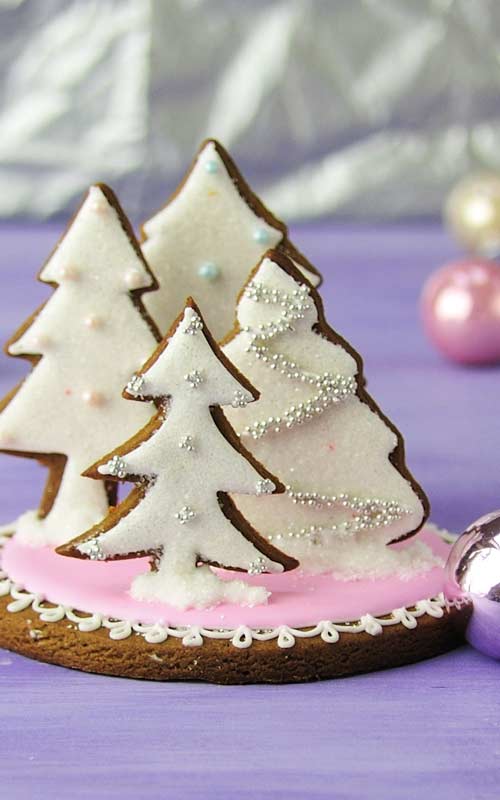
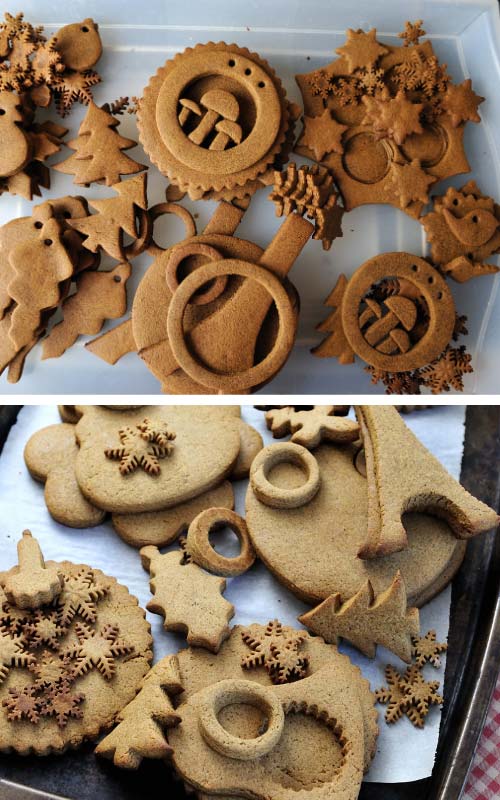
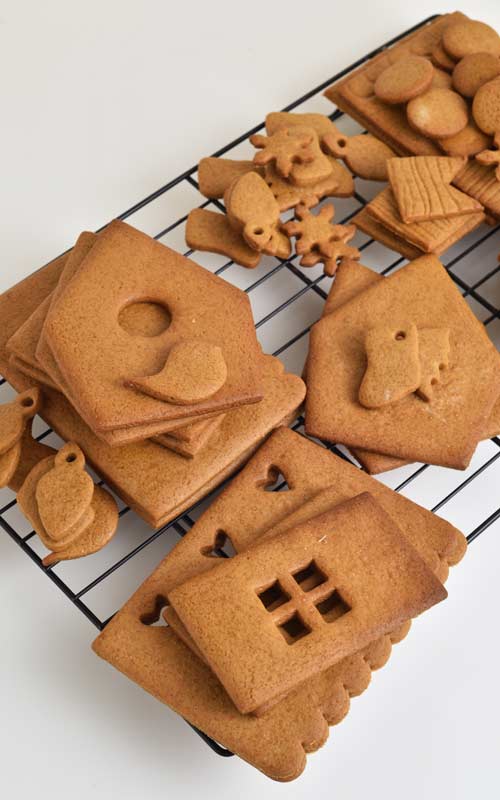
This Construction Gingerbread Cookie Dough is perfect for making long-term display gingerbread decorations and gingerbread houses. I’ve been using it for years. Often, keeping finished pieces for up to 2 years.
WHY I LOVE THIS RECIPE
- Flour-to-fat ratio: A higher flour-to-butter ratio creates a sturdier dough. Dough with less /butter/shortening/margarine is also less likely to spread. This recipe uses a ratio of about 1:4 (fat : flour).
- Flour – I use all-purpose flour ( with 10%-11% protein); I always have it on hand.
- Molasses, Corn Syrup, Honey – I use all three interchangeably, but corn syrup and molasses aren’t always available everywhere. What matters most is using the correct ratio. Adding too much will throw off the flour-to-fat balance, and over time, because all three ingredients are hygroscopic, the cookies will absorb moisture from the air, leading to structural instability.
- Molasses – adds a beautiful color and aroma. It can make the cookie a bit more brittle after cooling.
- Corn Syrup – you can use light or dark corn syrup. It keeps the dough more pliable after baking, and it’s easier to re-cut the shapes, or cut them after baking while hot.
- Honey – I love using honey because of the color profile, and I always have it on hand. Use honey with a viscosity similar to molasses.
COOKIE DOUGH INGREDIENTS
This fragrant cookie dough doesn’t have any leavening agents, and it doesn’t spread during baking. It’s especially important when making gingerbread houses or other complex structures that require precision.
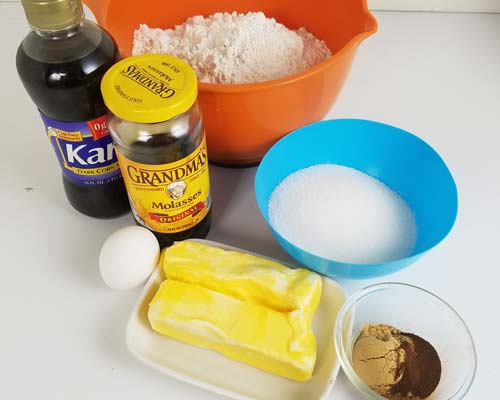
- All-purpose flour or a combination of all-purpose and bread flour
- Ground Spices: cinnamon, ginger, cloves, pepper, ground chili flakes(optional)
- Sugar
- Molasses|Corn Syrup|Honey
- Large Egg
- Margarine or Vegetable Shortening ( I don’t use butter as it’s expensive, and for gingerbread decoration that is not meant to be eaten, I prefer to use cheaper alternatives)
- Cocoa powder – optional, if you are in need of dark gingerbread, you can use 2-3 tablespoons per this recipe
FLOUR AND SPICES
I like to use fragrant spices in my construction gingerbread cookie dough. And I use them for a couple of reasons.
- I love the smell and the beautiful aroma lingering around the house. It’s perfect for the holiday season.
- Spices can also help keep pests away. This might be a good idea, especially if you plan to display or keep your decorations for an extended period. Cinnamon and cloves have been known to repel ants.
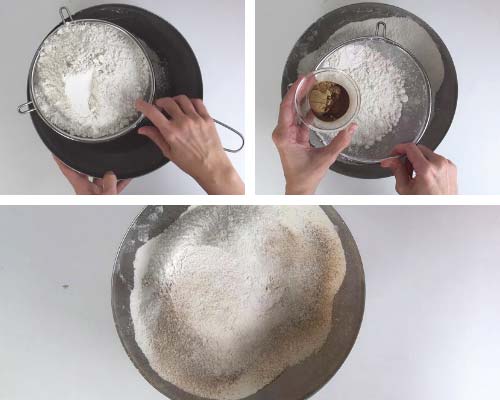
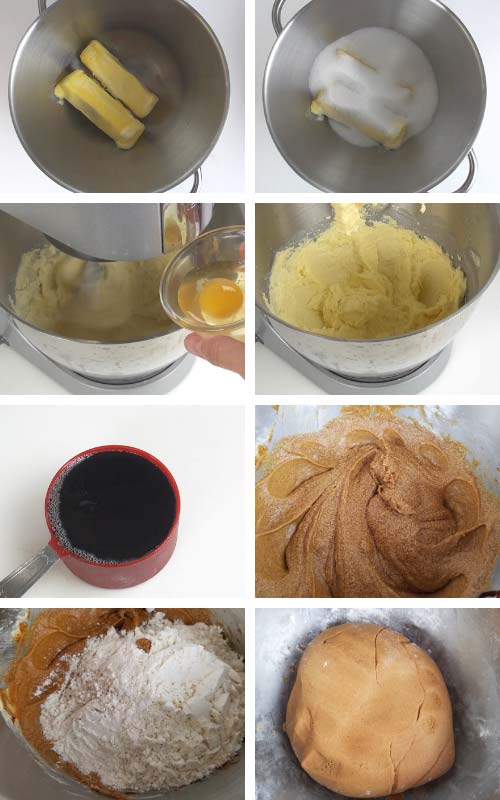
COOKIE DOUGH
- On medium-high speed, beat margarine and sugar until creamy, about 5 minutes.
- Then beat in one whole egg until well combined, 30 seconds to a minute.
- Scrape down the bowl and continue beating.
- Lower the speed to medium-low and gradually pour in molasses, corn syrup, or honey. Pour it down the side, not on the beaters.
- Beat well until combined, about a minute.
- Lastly, gradually beat in flour mix in 3 additions.
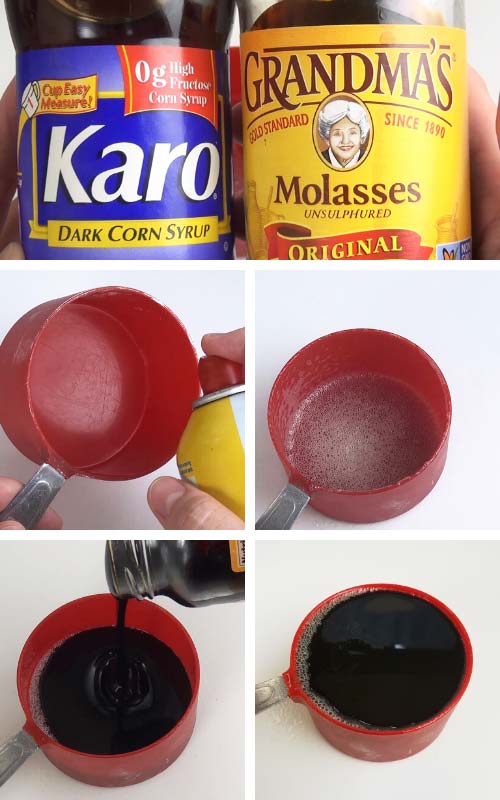
HOW TO MEASURE MOLASSES | CORN SYRUP| HONEY
- You can use Molasses, Corn Syrup, Honey, or a combination of the three.
- Spray a measuring cup with a nonstick spray. Pour in the molasses. Nonstick spray coating helps to release sticky molasses from the cup.
- For best results, use a kitchen scale to weigh ingredients.
SHAPE THE DOUGH
- Dump the fresh dough onto a lightly floured work surface or into a large bowl. I always use a bowl I had the flour in.
- Knead it with your hands for about 30 seconds until it comes together into a ball.
- If it appears too sticky, sprinkle up to ¼ cup of flour over it and gently knead it in.
- Shape the dough into a disk.
- Wrap it in plastic wrap and chill for several hours, up to overnight, or roll it out immediately.
- Dough will keep in the fridge for several days. Up to 3-4 days.
- It slowly dries out if kept for longer.
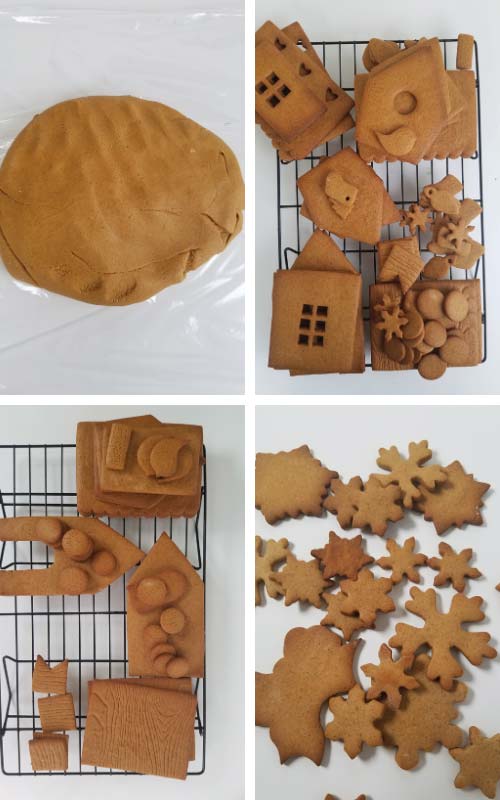
- Freeze for up to 3 months.

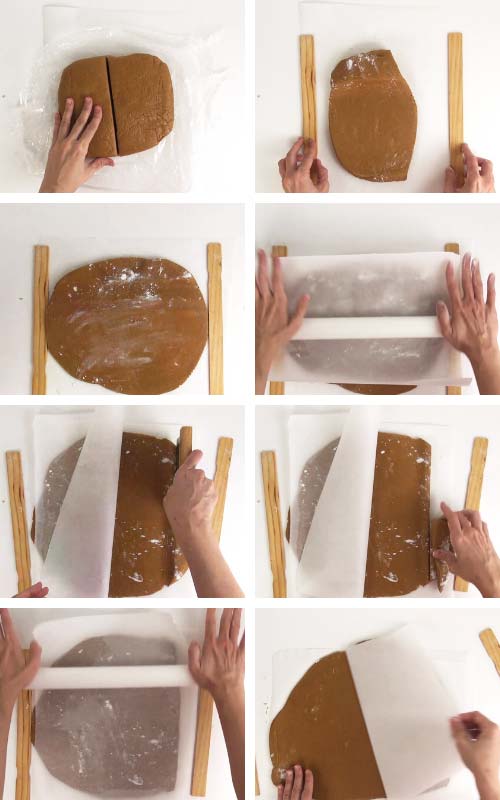
HOW TO ROLL OUT COOKIE DOUGH
- Rolling Guides -I use 1/4-inch (6mm) rolling guides to roll out dough for the house panels.
- And for small structures or individual cut-out cookie shapes, I try to maximize the dough yield and use 1/8-inch (3mm) guides. This highly depends on the project.
- Portion Cookie Dough – Depending on the size of the house you’re working on, you might want to cut the cookie dough disk in half and work with one half at a time.
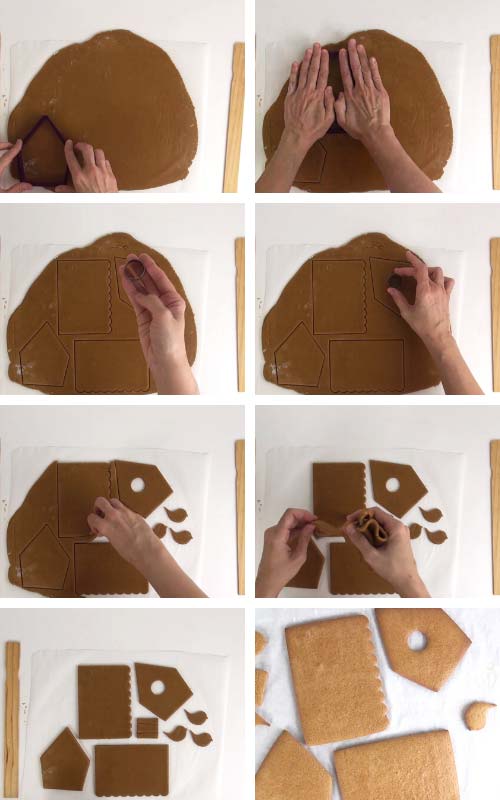
- Easy Dough-Rolling -Roll the cookie dough between 2 sheets of parchment or silicone baking mats. Be sure to cut the parchment to fit the baking sheet you will be using.
- To eliminate the ‘stretch’ and mishaping cookies when transferring onto a baking sheet, it’s best to cut the cookie shaped on teh surface you’ll be using to bake them on
- Prevent Sticking – Lightly dust the surface with flour to prevent the cookie dough from sticking.
- Setting Up Rolling Guides – Place a rolling guide on each side of the parchment sheet.
- Why a Large Rolling Pin Helps – I like to use a large rolling pin (20 inches long). This way, I can roll out a long, wide piece of cookie dough at once. It allows me to cut more house panels from a single piece of cookie dough.
COOKIE CUTTERS AND TEMPLATES
- Cutters and Templates – To make gingerbread house panels, you need cookie cutters or templates.
- Templates can be made from print or cardstock paper.
- Print or draw the templates.
- Trace the house panels onto paper, cardstock, or a plastic sheet.
- Cut the templates with scissors or an exacto knife.
- How to make cookie-cutter templates.
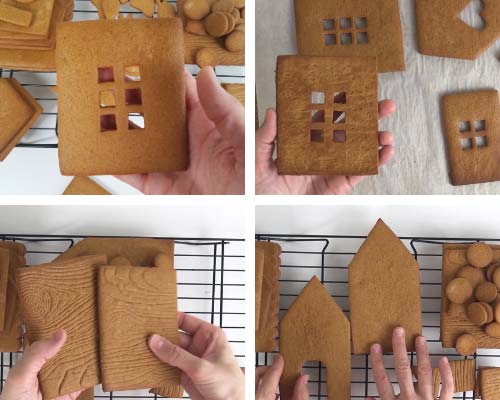
- Using Small Cutters for Details – In addition to the house-shaped cutters/templates, small geometric cutters can be very useful. Use them to create windows or to make extra cookies for decorating the outside of the house.
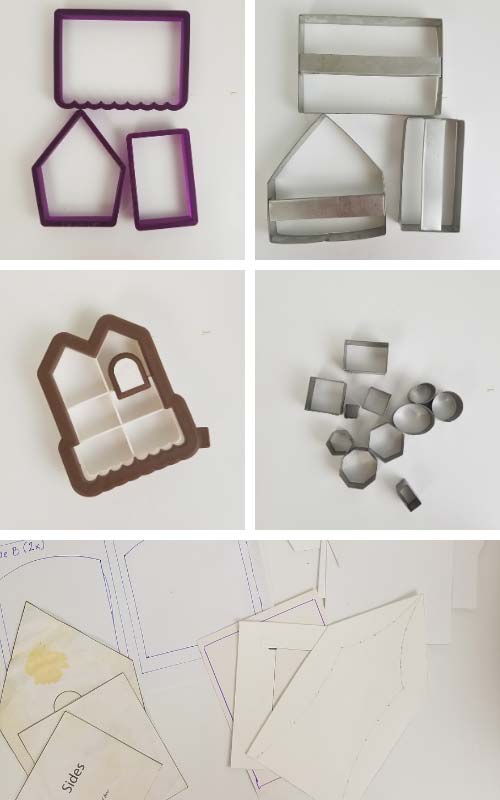
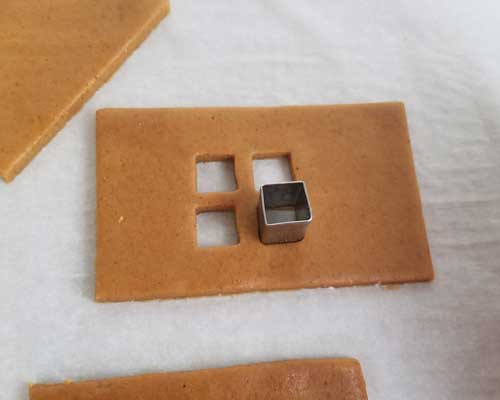
- I used a small square cutter to cut out window panes.
- Use these mini cutters to cut out window panels, doors, and other shapes as desired
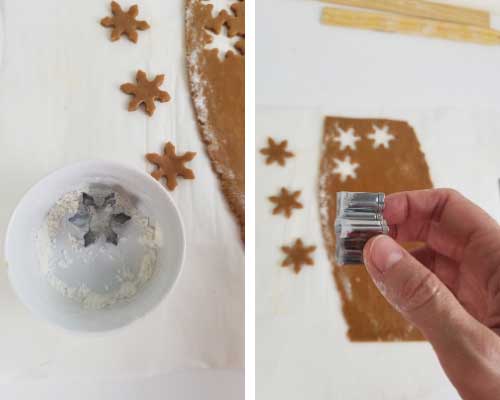
- Get creative, use rounds, hearts, stars, and rectangles.
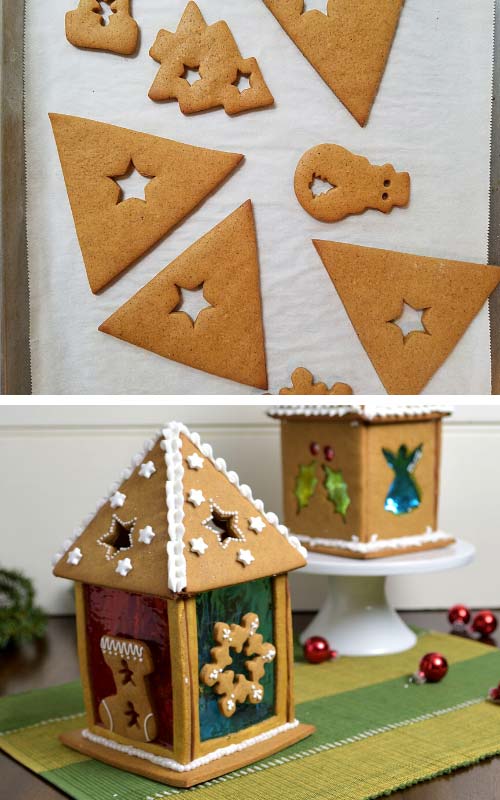
- It’s a gingerbread house, who says it can’t have star-shaped windows?
- For easier cutting, dust cutters with a little bit of flour.
CUTTING AND HANDLING CUTOUTS
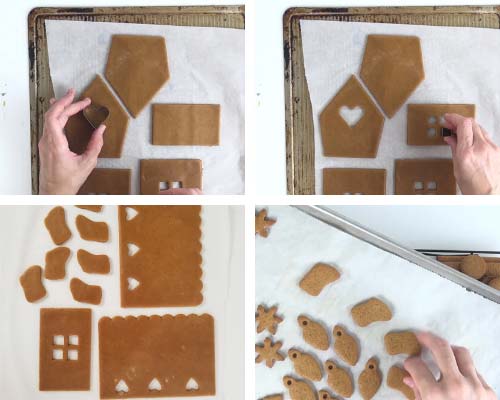
- Cutting Cookies Without Misshaping Them – To prevent cookies from stretching or losing their shape when transferring them onto a baking sheet, it’s best to cut them directly on the surface where they will be baked.
- Choose your Baking Surface – You can roll the dough on parchment and either flip it onto a perforated baking mat or leave it on the same parchment for baking.
- Remove the top layer of parchment, leaving the bottom parchment.
- With a pastry brush, dust off flour residue from the cookie dough.
- Cut out the large house panels first. Such as the front and back, the roof and the sides.
- Calculate to keep about 1/2 inch space between cookies.
- Remove scraps and slide parchment with house cut-outs onto a baking sheet. Don’t handle large cookie cutouts.
- Don’t try to move them as they will go out of shape.
BENCH SCRAPPER FOR STRAIGHT EDGES
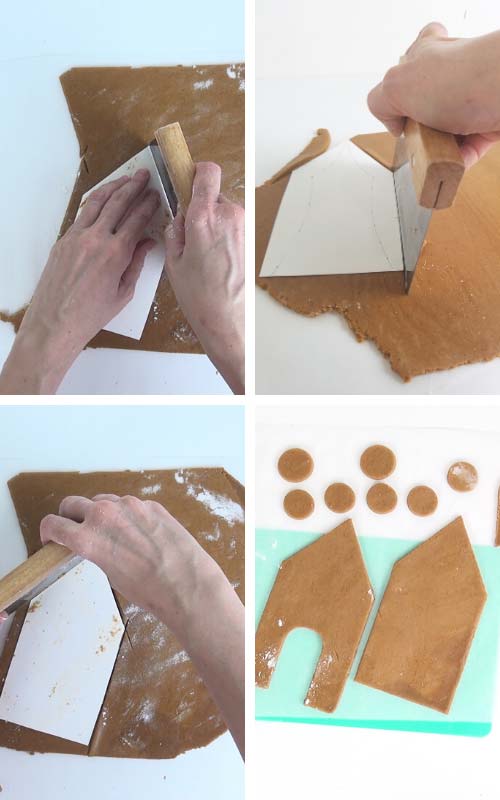
- Use a bench scrapper or a small ruler to cut out house panels with long, straight edges.
- Dust the bench scraper’s edge with a little flour to prevent sticking.
USING EXACTO KNIFE|PEN BLADE
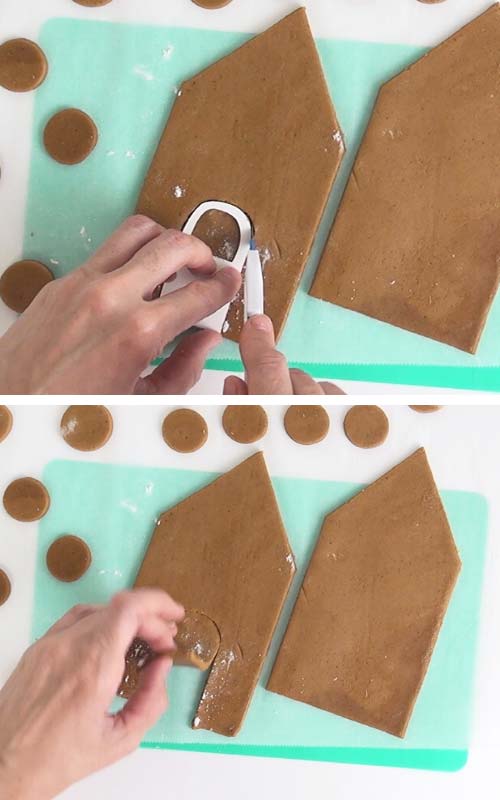
- Use a Knife for Detailed Shapes – To cut out more complex shapes without a cutter, such as doors, you can use a knife, an exacto knife, or a pen blade.
- Protect Your Work Surface – When cutting cookie dough with a sharp blade, I like to slide a plastic sheet (the green sheet in the picture below) underneath the parchment to protect my work surface/baking sheet.
- Tips for Hand-Cutting Shapes
- Chilled the dough for 10-15 minutes. Chilled dough is easier to cut with a knife/pen blade.
- Set the template on top and cut along the edges with a sharp knife.
- Use a straight-up-and-down cutting motion rather than dragging, as dragging can pull and distort the dough.
- If the template sticks, dust it with flour.
- Smooth rough edges with your finger.
BAKING CONSTRUCTION GINGERBREAD
- Temperature -I bake construction gingerbread at 350°F (175-180°C). Bake the cookies until the centers are no longer shiny and the edges are golden brown.
- Use 325°F (165°C) if your oven bakes hot.
- If you live in a humid area, I recommend drying out cookie panels a bit more. After their 1st bake, continue baking panels at 175F-200°F (80-95°C) for 20-30 minutes.
- Separate by Size – Bake large cookies separately from smaller ones.
- Baking Times – This depends on the size of the panels.
- Larger panels (up to 7-8 inches) take about 16 – 20 minutes.
- Small cookies/panels take about 10-12 minutes.
- Molded pieces can be baked just like flat pieces. Let molded pieces cool completely before handling.
GINGERBREAD HOUSE GLUE
- Table of Contents
- Royal Icing
- Melted Sugar |Caramel | Isomalt
ROYAL ICING
- My preferred glue for Gingerbread houses and decorations is Royal Icing.
- Royal Icing Glue Recipe – batch of Fresh Lemon Royal Icing Recipe.
- Consistency – Be sure to use thick royal icing to glue gingerbread house panels.
- Icing should be stiff but not too stiff.
- If you use icing that is too stiff, it won’t adhere to the cookie properly, and after drying, it will separate from the cookie, losing the bond, and the house will collapse.
- Glue Icing should be medium-stiff, with a peak that bends down.
- Working Time for Royal Icing – Royal icing doesn’t harden immediately; it takes time to dry. This gives you extra time to adjust the panels and their angles as needed.
- Drying Time – Royal icing takes 6-8 hours to fully dry, and up to 12 hours. A thicker application of icing will take longer to dry.
MELTED SUGAR | CARAMEL | ISOMALT
I’ve tried using melted sugar on several occasions. It bonds house panels instantly. However, for gingerbread houses or displays that need to last, I prefer royal icing. Melted sugar can be somewhat unpredictable, so I only use it for projects that don’t require long-term display.
- Melted sugar/caramel creates a strong bond instantly – I find this method very effective for certain projects, but it does have drawbacks. Since the bond sets almost instantly, there’s virtually no room for error when aligning the panels.
- Humidity – In a humid climate, over time, melted sugar glue will start to weep.
- Prepare Melted Sugar Glue – pour 3 – 4 cups of granulated sugar into a heavy stainless steel pot. Heat on medium heat until the sugar is completely melted. Keep an eye on it as it will caramelize quickly.
- Using Melted Sugar | Caramel – Dip the edge of the house panel into melted sugar. Immediately pick up the connecting house panel and connect it to the edge of the house panel dipped in melted sugar. Keep in mind to keep 90-degree angles between wall panels. Sugar hardens pretty much instantly; you need to work fast. And with precision.
- Adult supervision required: When working with melted sugar, be careful. Melted sugar is hot. Don’t burn yourself.
HOW TO BUILD A GINGERBREAD HOUSE
DECORATE AND ASSEMBLE
- I usually decorate house panels and then assemble the house.
- Before You Decorate
- Examine all the panels. If needed, fine-tune them.
- Use a microplane to shave off uneven edges.
- Shave the top edges of the roof to create approximately a 45-degree angle. This will help form a much cleaner, neater seam.
- Why do I Decorate Panels First?
- Flat pieces are easier to decorate with icing. Especially when flooding panels with icing.
- Icing dries evenly with no sliding or sagging.
- Decorating a horizontal surface is easier than decorating a vertical one.
- Lettering and fine details look cleaner on a horizontal surface.
- I can still add small piped details after the house is assembled.

- Decorate panels with icing, fondant, and other decorations.
- Let the icing fully dry before assembling the house.

GLUE HOUSE PANNELS WITH ICING
- Assemble Base (4 walls)
- Line the assembly tray/baking sheet with a rubber liner, or any anti-slip liner.
- Start by assembling the house base, consisting of the front, back, and sides.
- Pipe a thick line of medium- to thick-consistency icing along the edges of the front panel (step 1).
- Pipe icing on the outer edge of the side panels. Glue and align side panels onto the front panel (steps 2-4).
- Add a line of icing on each end of a side panel (step 5).
- Pipe royal icing along the short edges of the back panel, then glue it to the 3-wall base, aligning it with the side panels (steps 6-8).
- Let the base dry for 3-4 hours.
- Chimney – If the house has a chimney, assemble it; this can vary by project.

- Support the walls from leaning out or in. Use small sprinkle bottles or bamboo sticks.
- Clean up the seams. Scrape off excess icing if needed.
- Let the base dry for 3-4 hours before adding the roof.

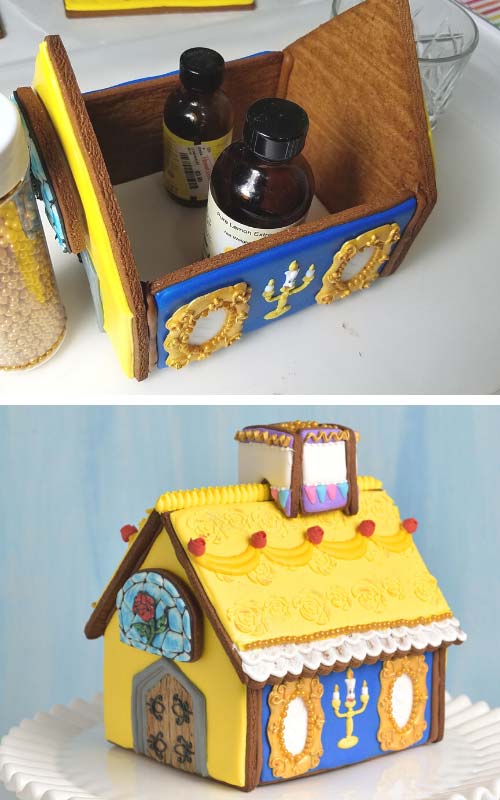
- Attach Roof Panels – these can be decorated, or you can decorate them after you assemble the house.
- Pipe icing on 4 edges on the back and front panels (step 1).
- Carefully, align roof panels atop the house base.
- Push panels onto the base so they sit on the base and adhere to the icing (steps 2-3).
- Use small bottles or a bamboo stick to support the roof panel from the bottom.
- This helps prevent panels from sliding down as the icing dries (steps 4-6).
- Clean up the edges with a scribe tool as necessary (step 7).
- Let dry overnight (step 8).

In this project below, I decorated each panel with a different theme.
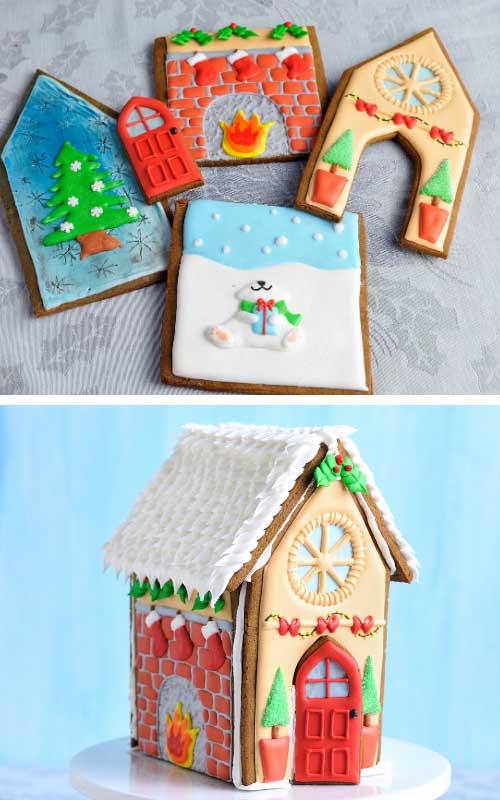
ASSEMBLE AND DECORATE
- Great for Decorating Parties
- This approach is especially practical if you’re hosting a gingerbread-house decorating party, especially for kids.
- Because the house is already assembled, they don’t have to wait for anything to dry or set; they can jump straight into decorating with candies, sprinkles, and other treats.
- Use thick royal icing to glue the decorations onto the house.
- Here is an example – Edible Simple Gingerbread House.
- If you’d prefer to make a simple gingerbread house that you can later enjoy eating, I recommend using my Honey-Gingerbread Cookie Dough instead of the construction gingerbread dough, which is edible but can be a bit hard to munch on.
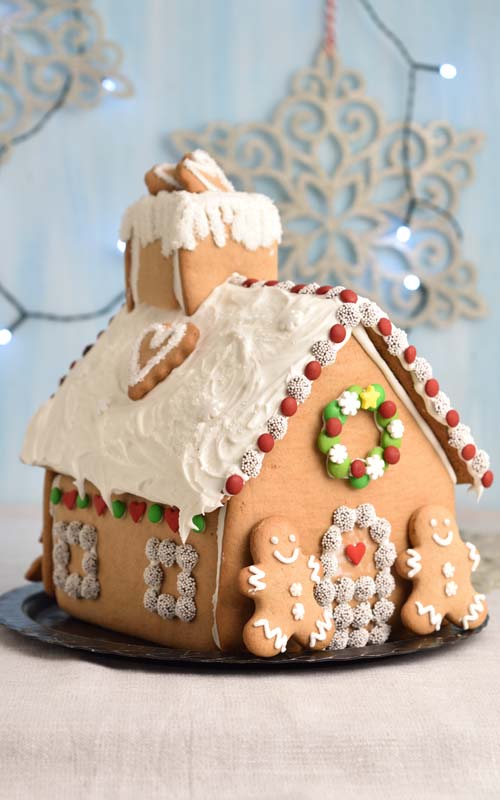
DECORATE ROOF
You can decorate the roof either before assembling the house or after it’s built or even do a bit of both.
- Use Icing
- For a simple design, spread a thick layer of royal icing over the roof panels and dust them with sanding sugar or sprinkles, or leave them plain.
- Add piped details, such as scallops, for a clean, traditional look.
- Use piping tips – such as leaf, petal, or star tips- to add texture and detail.
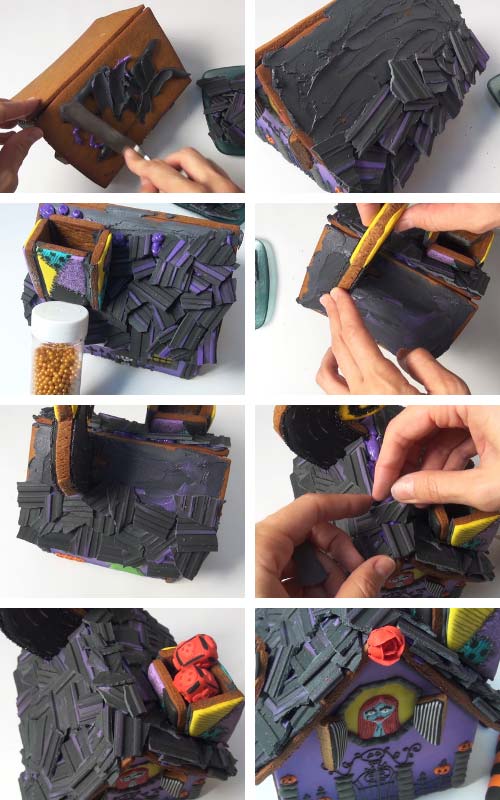
- Make shingles with royal icing, let them dry, and attach them to the panels with icing.
- Add fondant details or royal icing transfers.
- Pipe royal icing icicles along the roof edges for a wintery charm
- Use stencils and icing; possibilities are endless.
- Sprinkle edible glitter or sanding sugar over icing for a sparkling “fresh snow” effect.
- Use Edible Accents
- Decorate the roof with candies, cereal, and chocolates.
- Use pretzel sticks or wafer cookies for a rustic, textured roof.
- Overlap round candies to create candy shingles
- Think candy canes or peppermint candies.
- How about popcorn or marshmallows? That could be fun, too.

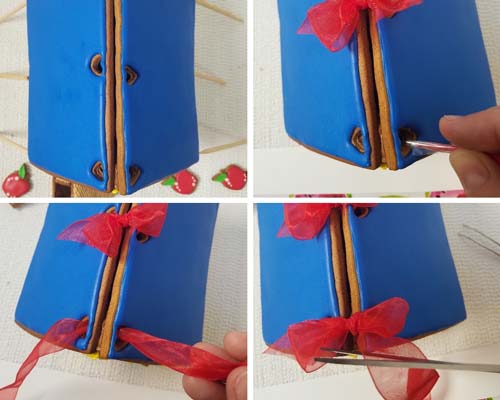
GINGERBREAD HOUSE WINDOWS | STAINED GLASS COOKIES
- Creating Glass-Like Windows
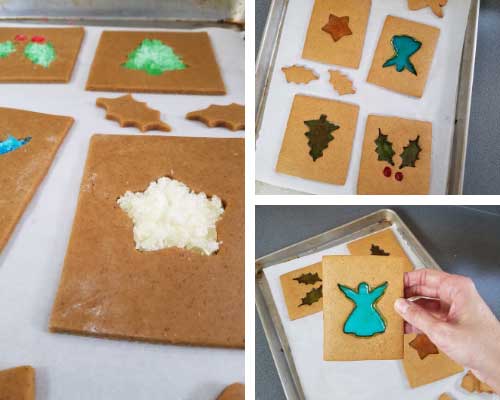
- Gelatin Sheets – Cut a gelatin sheet to the size of the window and glue it on the inside before you assemble the house.
- Isomalt – If you can get your hands on Isomalt you can use it instead of crushed candies or melted sugar.
- Isomalt melts at a lower temperature than regular sugar.
- It doesn’t caramelize/darken in color like regular granulated sugar. Isomalt will stay clear.
- You can get colored Isomalt if you’d like to make stained glass using different colors.
- If the Isomalt becomes slightly cloudy, you can very carefully use a blowtorch to turn it into clear glass.
- Melted Sugar/Caramel – Melt sugar, let it caramelize to your liking. Pour onto a parchment. Let harden. Peel off and glue on the inside of the house with royal icing. Or place baked cookies onto a parchment and pour it inside the windows. Let harden.
- Crushed Hard Candies – I like to pre-bake my gingerbread panels before I fill the open areas with candies.
- Let the cookies cool completely before adding the crushed candy
- Bake at 350°F for about 7 minutes, until the candy is melted.
- Allow the cookies to cool completely before removing them from the parchment-lined baking sheet.
CONSTRUCTION GINGERBREAD FAQ
This could be due to too much flour or not enough moisture. If your cookie dough is crumbly, gently knead it 1 teaspoon of water at a time until it comes together.
Well, wrapped, it keeps in the fridge for 3-5 days. After that, it slowly dries out and loses some elasticity.
Yes, wrap the dough well in the food wrap and store it in a freezer-safe bag. Freeze for up to 3 months. Let defrost on the counter or in the fridge before using.
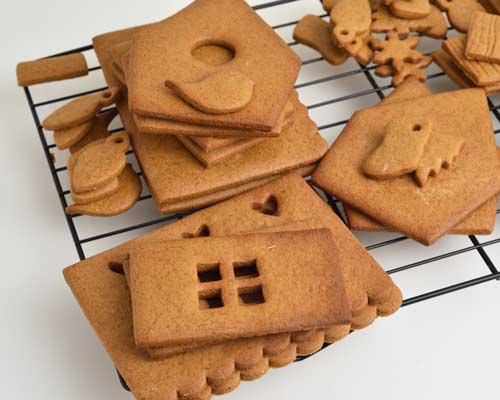
Store baked and cooled cookies flat in an airtight container at room temperature, separating each layer with parchment.
For large panels, place them on flat trays, layer them with parchment, and weigh them down to prevent warping.
Even though this dough is fully edible, I wouldn’t recommend munching on this. However, I get emails from people who say they love this dough, too.
Cookies are rather hard and spicy.
For tastier gingerbread for simple houses that don’t bake so hard, use my Edible Gingerbread Cookie Dough.
If you live in a humid climate, you’ve probably noticed that sugar and humidity don’t get along. Baked gingerbread can absorb moisture from the air, which often makes the cookies soft.
Here are a few ways to prevent this:
Dry the cookies in the oven: After baking, lower the oven to its lowest setting. Place the cookies on a baking sheet and bake them for 30 minutes to an hour.
Protect the house walls: Before assembling the gingerbread house, brush the inner walls with royal icing to create a humidity barrier.
Absorb excess moisture: Place a small container of rice inside the assembled house to help control humidity or food-grade silica gel packets.
Not enough moisture. Mist the dough with water, cover for 5 minutes, and gently knead it together. Let it rest before rolling it out.
When you knead the dough, try not to incorporate too much air. These air pockets expand in the oven, causing cookies to crack or have bubbles.
Flatten the tops of the cookies while they’re hot with a flat spatula.
Place a piece of parchment on the top and weigh the panels down with a flat baking sheet.
Excessive kneading can lead to too much gluten development. Dough with a tight gluten network resists stretching, causing the cookies to shrink in the oven. Let the dough rest to help the gluten relax.
Make sure to chill the dough before baking. Use room temperature shortening or margarine.
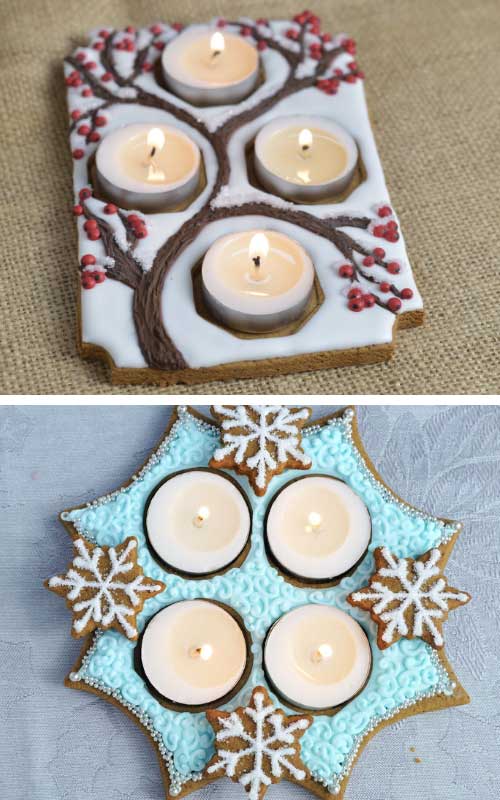
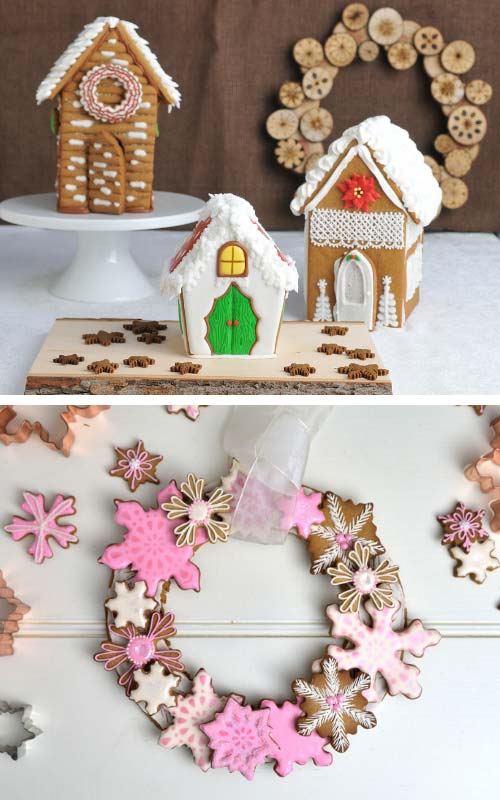
GINGERBREAD INSPIRATION

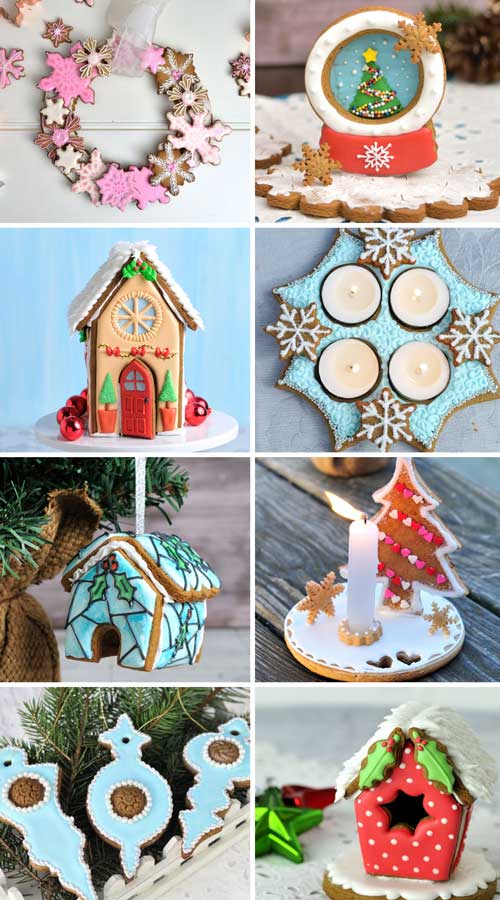
MORE GINGERBREAD COOKIE DECORATING IDEAS
- Beauty and the Beast Gingerbread House
- Harry Potter Gingerbread House
- Addams Family Gingerbread House
- Cute 3D Sleigh Cookies
- Nightmare Before Christmas Gingerbread House
- Mermaid Gingerbread House
- Valentine’s Day Gingerbread House
- Hocus Pocus Gingerbread House
- Haunted Halloween Gingerbread House
- Christmas Gingerbread House
- Holiday Bird House

Gingerbread Construction Dough
Ingredients
GINGERBREAD CONSTRUCTION COOKIE DOUGH
- 1 cup granulated sugar (200 grams)
- 1 cup margarine (226 grams)
- 2 room temperature eggs
- 1 cup molasses (340 grams) Substitutes: corn syrup, honey.
- 6½ cups all-purpose flour (930 grams), plus more if needed for rolling
- 2 tbsp ground ginger
- 2 tbsp cinnamon
- 2 tsp cloves
- 1 tbsp dark cocoa powder (optional), Use cocoa powder if you are using honey or corn syrup and you'd like the dough to be a bit darker.
Instructions
GINGERBREAD CONSTRUCTION COOKIE DOUGH
Gingerbread Dough
- In a medium bowl, whisk together all-purpose flour ( 6½ cups, 930 grams), ground ginger ( 2 tablespoons), ground cinnamon ( 2 tablespoons), and ground cloves (1 teaspoon).TIP: If you plan on displaying your gingerbread house for an extended time (a year or so), I suggest using some white pepper (1/2 teaspoon) in addition to all the spices. Spices deter small insects from taking a bite from your beautiful gingerbread house.
- Cream margarine (1 cup, 226grams) with granulated sugar (1 cup, 200grams) until mixture is light and fluffy, about 2-3 minutes.
- Add eggs (2 whole, large eggs, at room temperature), one egg at a time and beat well. Then gradually beat in molasses (1 cup, 340grams) and beat until smooth, about a minute.TIP: You can substitute molasses for corn syrup, either light or dark, or honey. Or use a combination of molasses, and corn syrup or honey.
- At low speed, gradually, in 3 additions add flour mixture to the wet mixture.
- Turn the dough onto a work surface and knead it for 30 seconds to a minute until it comes together into a large ball. If the dough appears too crumbly, add 1tsp water.
How To Roll Out Gingerbread Dough
- I like to roll my cookie dough between 2 silicone mats or parchment sheets to 1/8 to 1/4 inch thick. I often lightly dust my work surface with flour. Once I have all the cookie dough rolled out, I like to chill it for 40 minutes or so. TIP: If you are not making house panels right away I recommend you tightly wrap freshly made gingerbread dough into a food wrap and place it into a fridge for up to 3 days. Let it soften a little before rolling it out.
- It's best to cut the house pieces on the material you are using to bake them on, so you don't have to pick them up after they are cut.When hand-cutting with a knife, I prefer to cut and bake gingerbread pieces on parchment to avoid cutting thru the silicone mat. I slide the parchment with rolled-out cookie dough onto a cutting board and I hand-cut cookies.
Molded Gingerbread
- You can use this recipe to make molded gingerbread pieces. Dust texture mats with a little bit of flour before using. For deeper molds, such as skulls, I like to use a non-stick spray and freeze the mold with cookie dough and then unmold.
How to Bake Construction Gingerbread
- Bake construction gingerbread at 350F (180C) for 12-15 minutes or longer depends on the size of the cookies. I like to bake house panels until they are golden brown around the edges.Larger pieces I often bake for 16-20 minutes. While baking, sometimes little bubbles can form on top of the cookies. Using a toothpick, make a pinhole in the cookie, where the bubble appears to be forming, while still hot to deflate the bubble. You can also flatten the cookie with a wide spatula while the cookie is still hot.
- When baking small pieces for your gingerbread centerpieces, you need to watch them carefully as they bake, they will be done in less time.
- Thicker the cookie more time needed to bake them. I usually bake small pieces on the same baking sheet and large pieces on the another sheet.
- Cool the cookies completely before decorating.
Notes
- This is a large batch of gingerbread dough, and it makes 3 standard-size gingerbread houses.
- Yes, you can omit molasses and use just honey.
- Yes, this recipe can be halved.
- You can skip ground ginger and use cinnamon instead if you prefer.
This post was originally published on November 23rd, 2012. I updated this post on November 12th, 2019, with new photos and written text.
This post contains Amazon affiliate links that earn me a small commission, at no cost to you. I only recommend products that I use and love. Learn more about my affiliate policy here.

Hi, I’m Hani
Welcome!
Thank you for visiting Haniela’s. On my blog, you’ll find delicious sweet & savory recipes made with simple ingredients. Why not start a new adventure? Discover a world of cookie decorating with my step-by-step tutorials.
Hi, I’m Hani
Welcome!
Thank you for visiting Haniela’s. On my blog, you’ll find delicious sweet & savory recipes made with simple ingredients. Why not start a new adventure? Discover a world of cookie decorating with my step-by-step tutorials.




Hello! Your recipe sounds just what I’ve been looking for! I love my gingerbread hard, crispy and spicy! I have a question for you. I have a cast iron house shaping mold, and would love to use it for baking. Would you recommend changing anything for baking in cast iron? Thanks!
Hi Cami,
While I haven’t tried it with cast iron mold. I think I’d let it rest in the fridge for 20 minutes before baking, just to ensure the gluten is well relaxed, in case the dough was handled too much in the molding process. Have you used this mold before? I would also greased it before pressing the dough in.
Just made this recipe into gingerbread men and woman using corn syrup. I also replaced the ginger with nutmeg (personal fragrance preference). Super easy to work with. Last batch in the oven now. I plan to have my grands decorate them with puff paint. I hope they hold up throughout the season! Thanks much!
Hello!
That’s awesome. Sounds like lot of fun for the grandkids. Happy Holidays!
Hello Hani,
Getting ready to make at least 12+ houses for a Culinary class for kids. I have your recipe dated 12/15/20 and it says 7 cups of flour 1 1/2 cups of molasses. Should I use your updated recipe 2025 or use the recipe dated 2020? Other ingredients are basically the same, except you have 2 eggs instead of 1 egg and 1 cup of molasses instead of 1 1/2 cup.
Hi Connie,
I’m using a new version or the recipe now. Thank you.
What a fun activity for the kids. They will love you!