
How to Make German Buttercream Recipe |Science+Video|
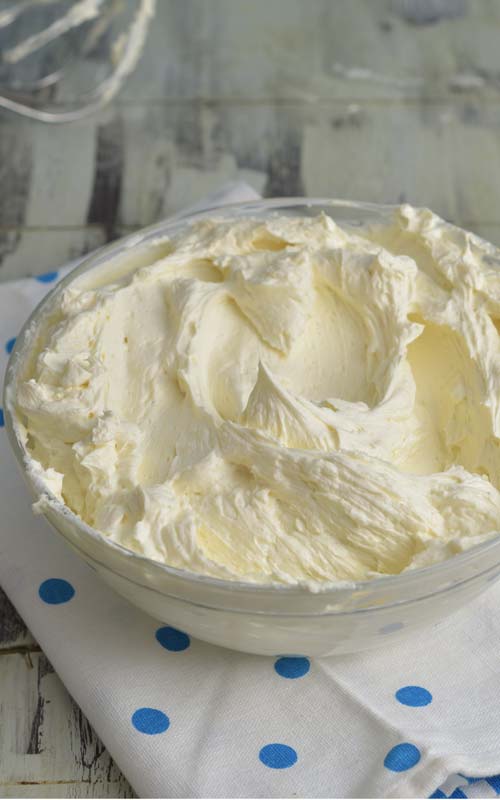
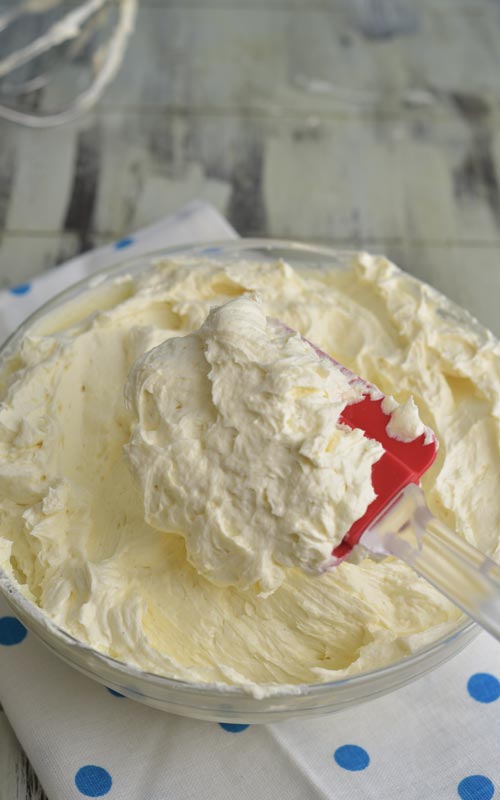
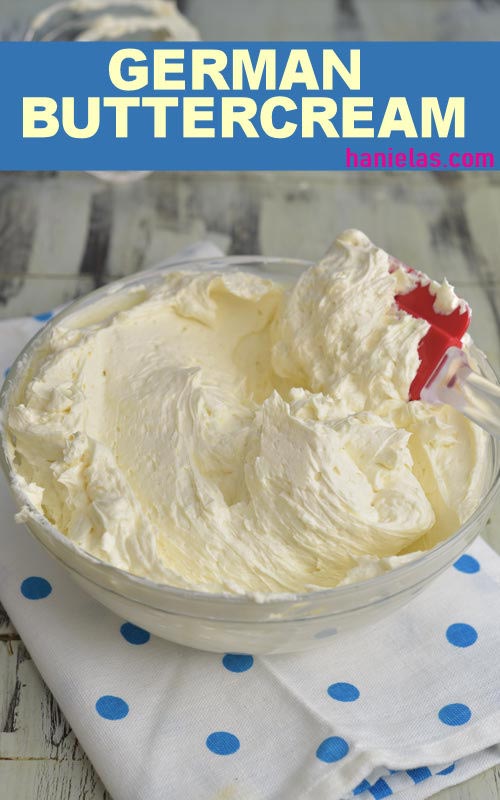
German buttercream is my childhood favorite. It’s silky-smooth, custard-based frosting made by whipping butter into a rich egg-and-starch custard. You’ll be surprised by how light and not overly sweet it is. Versatile and reliable, it’s perfect for filling, frosting, and piping details and swirls onto cakes.
Featured Comment ⭐⭐⭐⭐⭐- “I grew up eating cakes with German buttercream. It has a delicate yet rich flavor that American buttercream does not have. I’ve tried for years to find a recipe that came close. This was so simple to make and absolutely delicious!” Bree
WHAT IS GERMAN BUTTERCREAM AND WHY I LOVE IT
- Enriched custard buttercream – In simple terms, this buttercream is made by beating butter into a thick, rich, egg and starch-based custard, aerating it into a silky-smooth buttercream.
- Not too sweet – If you are not a fan of heavy or overly sweet buttercream, you need to try this. It’s light and silky-smooth, with a subtle sweetness.
- Versatile – You can use it to fill cream puffs, eclairs, cakes, or pastries. It pairs well with fruit, and the chocolate variation is my go-to recipe for Dobos Cake.
- Stable – Desserts made with German buttercream keep well at room temperature for 2 days.
- Pipeable -It also pipes beautifully on cupcakes and cakes.
- Freezer-Friendly – I often make a large batch and freeze the leftovers for later.
SUBSTITUTIONS
- Eggless alternative – Growing up, I often helped my mom or my grandmother make it with a pudding mix; they didn’t use any eggs because eggs were expensive. The idea was to use the pudding in place of an egg-rich custard, then beat the butter into the cooled pudding. That’s why you’ll hear me refer to it as pudding buttercream.
- Pudding (not instant) – I’m referring to puddings like Dr. Oetker’s that are made with a thickening agent (cornstarch), a yellow/orange color (beta-carotene), flavoring, and salt. To make a thick pudding, mix 74-80 grams of pudding mix (usually 2 packets) with 2 cups (500 ml/grams) of milk.
- Bird’s Custard Powder – Is vegan and doesn’t contain gluten, and these are the ingredients: Maize Starch (cornstarch), Salt, Color (Annatto Norbixin), Flavoring, and according to the manufacturer, it thickens using Dairy Milk, Goat’s Milk, Soya Milk, Rice Milk, and Lactose Free Milk.
- Milk substitutions – It’s perfectly fine to use a dairy-free milk alternative. Keep in mind that the milk’s flavor might slightly affect the buttercream’s flavor. Oat milk and unsweetened soy milk are quite neutral in taste and yield optimal results.
- Butter substitutions – Use vegan butter (Earth Balance, for example).
- Gluten-Free – My recipe relies on cornstarch and flour to create starch-bound custard. If you need a gluten-free version, you can replace flour with a starch.
INGREDIENTS
- Custard
- Milk – I prefer to use whole milk. Reduced-fat milk can also be used, but it yields slightly less rich custard. If you’re using reduced-fat milk, you can enrich it by adding an extra egg yolk or two. Alternatively, you can replace part of the milk with whipping or heavy cream. I don’t recommend using fat-free milk. It produces custard that lacks depth.
- Egg yolks (from large eggs) – Eggs help thicken the mixture and act as an emulsifier, adding richness and creaminess while also giving the buttercream its signature subtle yellow color.
- Granulated Sugar – It seems so obvious, it sweetens the custard. But, hold your horses, there is more to the sugar than meets the eye. Sugar helps delay egg coagulation by coating the proteins, essentially preventing the custard from turning into scrambled eggs. And sugar also helps balance the flavors.
- Thickening Agents – I use cornstarch and flour to thicken the custard. A combination of both provides just the right amount of stability and creaminess, and it’s neither too opaque nor too clear.
- Cornstarch is a pure starch and helps thicken custard through thru gelatinization process, which is why the mixture looks kind of like a gel and is somewhat clear in appearance. It is ubiquitous in pudding mixes and a reliable thickener for puddings, sauces, and more. The issue arises when a cornstarch-based custard sits for too long. Over time, a process called retrogradation occurs. It’s when starch molecules begin to crystallize and release water, causing the custard to lose some of its structure and become a bit thinner. This can weaken the buttercream’s stability, which is why I like to include a second thickening agent.
- Flour – I use it because it makes custard luxuriously creamy and opaque, and, most importantly, it is more stable than cornstarch. Flour contains protein, and the presence of gluten provides a more reliable, resilient structure.
- Butter Mixture
- Unsalted butter at room temperature -If you haven’t made this buttercream recipe before, try a 2:1 (custard-to-butter) ratio first. And if you prefer a richer, more buttery taste, increase the butter to a 1:1 (custard-to-butter) ratio.
- Powdered Sugar – I also use powdered sugar in this recipe; it adds stability to the finished buttercream and lets me increase the sweetness if needed.
- Vanilla Flavoring – You can use Extract or Vanilla Bean Paste; if you don’t have either, you can omit 1 to 2 tablespoons of sugar and use well-pulverized Vanilla sugar instead.
- Salt – Add salt to balance the sweetness.
THINGS YOU NEED
- Glass Mixing Bowls
- Spatula
- Whisk
- Fine Mesh Strainer
- Mixer, either handheld or Stand Mixer
- Stainless Steel Sauce Pan
- Vanilla Extract
- Vanilla Bean Paste
This post contains Amazon affiliate links that earn me a small commission, at no cost to you. I only recommend products that I use and love. Learn more about my affiliate policy here.

CUSTARD/PUDDING
I start by whisking together the milk, sugar, and egg yolks. To prevent lumps, I mix the flour and cornstarch into about 1/2 cup of this mixture until smooth, then pour it back into the remaining liquid and whisk to combine.

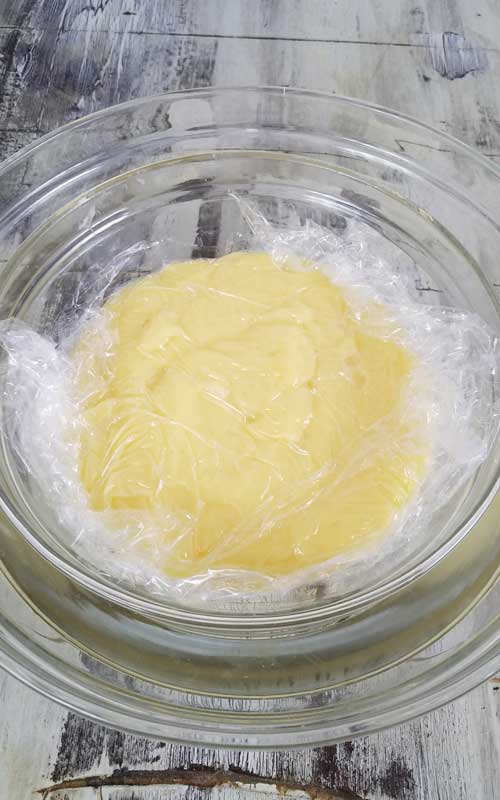
Cook the custard over medium heat, stirring constantly, until it begins to thicken. Once it comes to a gentle boil, reduce the heat and cook for another 2–3 minutes to cook off the floury and starchy taste. The mixture will be thick. Remove from the heat and immediately strain the custard through a fine-mesh sieve, pressing it through with a silicone spatula. Discard any cooked egg bits left behind. Cover the custard directly with plastic wrap, pressing it onto the surface to prevent a skin from forming.

COOL CUSTARD
Before combining the custard with butter, let it cool to room temperature. To speed this up, place the bowl in a cold water bath or refrigerate it instead.
CREAM BUTTER AND CUSTARD
One key lesson I’ve learned from making this buttercream for years is that both the butter and custard must be at room temperature for a smooth, silky texture and buttercream that doesn’t curdle or separate.
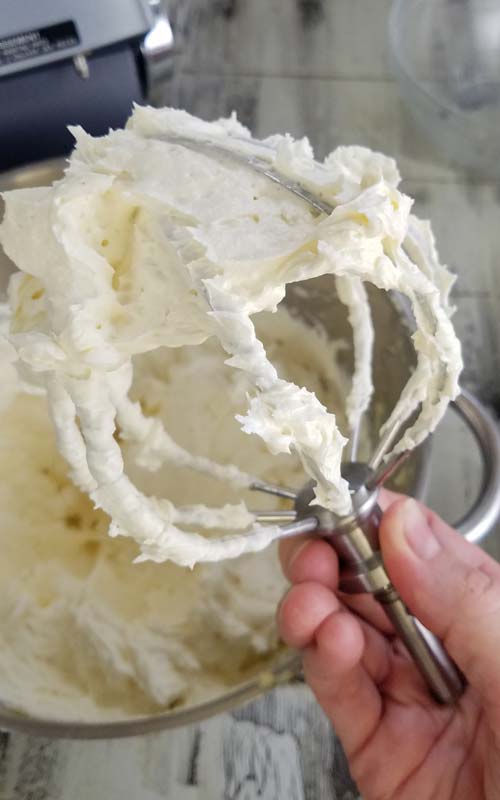
Start by creaming room-temperature unsalted butter with powdered sugar, then gradually mix in the room-temperature custard using a wire beater. Finish with vanilla extract, and if you have it, a little vanilla bean paste for an extra boost of flavor.
To quickly bring refrigerated custard to room temperature, microwave it in 5-second intervals, stirring gently between each burst. It usually takes about 10 seconds total.

This buttercream is not overly sweet. If you prefer sweeter taste, add 1/2 cup more powdered sugar.
COLORING AND PIPING WITH BUTTERCREAM
- You can color German Buttercream with gel food colors and use a wide range of piping tips to create pretty piped designs.
- Just like any other buttercream, heat will make German Buttercream softer.
- If you notice the buttercream is getting softer as you pipe with it, place it in the fridge for 5-10 minutes.


CAN I USE IF TO DECORATE A CAKE
German Buttercream can be used to ice the outside of the cake. However, it is a bit different to work with than Swiss Buttercream. It is more elastic. I’ve used it to ice my Brushstroke Ghost Cake (via YouTube).

HOW TO MAKE WHITE BUTTERCREAM
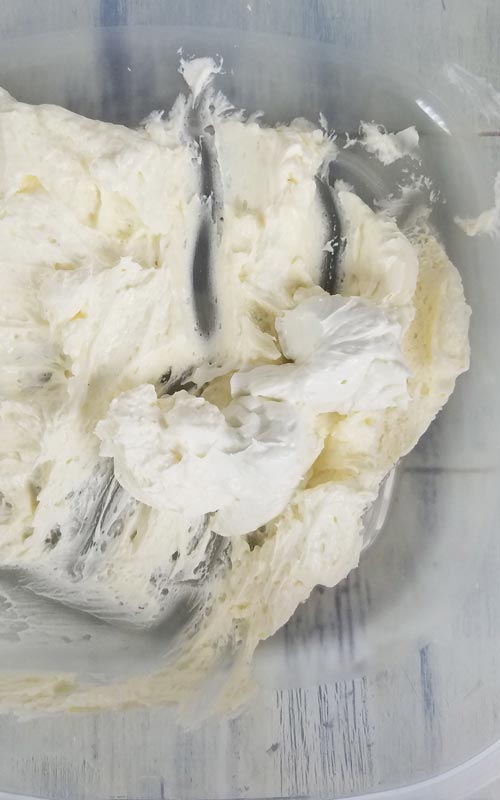
German Buttercream has a creamy color with a yellow tint. Personally, it doesn’t bother me. But I know you might occasionally want pure white buttercream instead. To remedy off-white buttercream, you can either add White food coloring or, if you are brave enough, add a minuscule amount of Violet or Purple. By minuscule, I mean a tip of a toothpick dipped in food coloring.
- First and foremost, if you are planning to neutralize yellow with purple, test it on a small portion of buttercream. If I don’t have purple, use sky blue and electric pink instead.
- You can see my results in the picture below. Notice whiter buttercream in the middle?
HOW TO MAKE DIFFERENT BUTTERCREAM FLAVORS
If you like to play with different buttercream flavors, try infusing milk. You can try coffee beans, mint, vanilla beans, and lavender. Or, as one reader suggests in the comments section, replace some of the milk with condensed milk. Or use concentrated, reduced fruit purees or thick caramel sauce, about 1/2 cup per batch.
SUCCESS TIPS
It keeps in the fridge for up to 2 weeks. Let it come to room temperature before using. A cake frosted with buttercream can be kept at room temperature for 2 days.
Yes, it can be made ahead of time. It can be frozen in a freezer-safe container for up to 3 months. Let it defrost on the counter overnight and re-whip before using.
If the buttercream looks broken or separated, gently warm it to help it come back together. Heat it in 5-second intervals in the microwave or over a pot of simmering water, whisking well after each interval until it becomes smooth and emulsified.
Alternatively, warm about 1/2 cup of the buttercream for 5–10 seconds, then beat it back into the remaining portion until fully combined and silky again.
2:1 Custard to Butter is a ratio that yields a light, silky smooth texture.
1:1 Custard to Butter yields rich and slightly heavier buttercream.
Excessive stirring of cooling custard, especially one made with only cornstarch, can make it runny.
German Buttercream
Ingredients
Custard
- 2 cups milk 500 ml/grams
- 4 eggs from large eggs
- 3/4 cup granulated sugar 150 grams
- 1/8 tsp salt
- 3 tbsp cornstarch 25 grams
- 3 tbsp flour 27 grams
Buttercream
- 2 cups room temperature butter 452 grams
- 1 cup powdered sugar 120-125 grams, use more for sweeter buttercream
- 1 tsp Vanilla Extract
- 1 tsp Vanilla Bean Paste
Instructions
Custard
- In a saucepan, whisk together milk (2 cups, 500 grams), egg yolks (4), granulated sugar (3/4cup, 150 grams), and salt (1/8tsp). Pour about 1/2 of this mixture into a dish. Into it, then add starch (3tbsp, 25 grams) and flour (3tbsp, 27 grams). Whisk well so there are no lumps. Pour the flour/starch mixture into the remaining milk mixture in a saucepan and combine.
- Cook on medium heat, stirring constantly. Custard will gradually thicken. I find it's best to use a whisk. Bring it to a boil. The mixture will be thick, so look for a bubble that pops, then reduce the heat to low and simmer for 2-3 minutes.
- Remove from the heat and strain through a fine mesh sieve. Cover tightly with a plastic wrap and let cool to room temperature.
- To speed up the cooling process, you can place the custard into a cold water bath. Or, if you plan to make the buttercream the next day, cover the surface directly with plastic wrap to prevent a skin from forming and refrigerate it overnight.If you refrigerate the custard, let it come back to room temperature before mixing it with the butter. To speed things up, I microwave the cold custard in 5-second intervals, stirring gently after each heating until it’s smooth and room temperature, but not warm.
Blend Custard and Butter
- Using a wire beater, beat room-temperature unsalted butter (2 cups, 4 sticks, 452 grams) for 15-30 seconds. Then add powdered sugar (1 cup, 125 grams) and beat on low until fully incorporated into the butter. Increase the speed to medium and beat for a couple of minutes.
- Gradually add room-temperature custard to butter, creaming well after each addition.Once fully blended, beat in Vanilla Extract and/or Vanilla Bean Paste.Beat on high for 10 seconds. German buttercream is ready.To eliminate air bubbles, switch to a paddle attachment and let it run on low speed for 5 minutes.
Video
Notes
- Storage – It’s okay to leave it at room temperature. It’s a fully cooked buttercream. You can leave it at room temperature for up to 2 days.
- Fridge – Store in the fridge for up to 10 days. Let it come to room temperature, then remix till smooth.
- Freezer – Freeze for up to 3 months. Let defrost, and remix before using.
- Separated buttercream – This usually happens when there is too much of a temperature difference between the butter and the custard. The quickest way to fix separated buttercream is to melt about ½ cup of the broken buttercream until smooth and fluid. With the mixer running on low to medium speed, slowly pour the melted mixture back into the remaining buttercream. Then increase the speed to medium-high and whip for 1–2 minutes, until the buttercream becomes smooth and fully emulsified again. Separation can also surface after freezing and thawing the buttercream.
- German Buttercream Uses
- Filling for cream puff, cakes.
- Piped swirls on cupcakes and cakes.
- It pipes beautifully on cakes and cupcakes.
- You can frost the cake with it. I’ve done this in the past, though I find it a bit more elastic than Swiss or American Buttercream.
- Can I color German Buttercream? – Yes, you can color this buttercream. I use gel food colors.
PIN IT for later

Hi, I’m Hani
Welcome!
Thank you for visiting Haniela’s. On my blog, you’ll find delicious sweet & savory recipes made with simple ingredients. Why not start a new adventure? Discover a world of cookie decorating with my step-by-step tutorials.

Hi, I’m Hani
Welcome!
Thank you for visiting Haniela’s. On my blog, you’ll find delicious sweet & savory recipes made with simple ingredients. Why not start a new adventure? Discover a world of cookie decorating with my step-by-step tutorials.

Can you make this ahead of time?
Yes. You can store in the fridge of freeze it. Allow it to come to room temperature and re-whip it again.
Used condensed milk to add depth of flavor, and worked wonderfully. Thank you.
That sounds amazing! Thank you for sharing.
Hello, this buttercream sounds delicious. I was wondering if I could use American “Jello instant-no cook pudding mix” prepared, instead of making it from scratch?
Thank you
Hi Patty,
I haven’t tried it myself, but I’ve seen recipes using instant pudding (4 servings) make
this type of pudding buttercream. For the amount of butter in this recipes. I’d use 2 instant puddings and I’d make the pudding thick, so maybe don’t use as much liquid.
I’d test it first, with 1/4 cup of butter, just to be safe. I’d have to test it out to give you more tips.
Hi! I was just wondering whether this buttercream tends to form a crust due to the cornstarch in the custard? Thanks
Hi Amos,
it doesn’t crust. Thank you.
I had an issue with the custard. First of all, it got so thick that it was very difficult to get it to “bubble” without burning it. It was also too thick for the sieve. I swirled it around through the sieve for a long time and had a very hard time getting it to go through. Basically, it was just too thick. Would you suggest I reduce the cornstarch next time?
Hi Dina,
I wonder what happened. If it’s that thick, yes I’d suggest reducing the amount of starch. The custard should be quite thick. If you have any pictures, please don’t hesitate to email them to me to have a look. Thank you.
I found that using a hand blender after “pudding” is cooled works very well to make the mix more runny
Thank you for the tip Mary.
Hello. Does it matter if the milk is 2% or whole?
HI Christina,
2% is fine.
Best,
Hani
Can I turn this into chocolate buttercream? If so…what do I need to add??
Thanks You!!!
Hi Brad,
For the chocolate version, I start with a chocolate custard/pudding. I like to add 1/4 to 1/3 cup cocoa powder to the custard mix, up the granulated sugar to 1 cup, add chopped chocolate once it thickens, about a cup. And up the powdered sugar to your liking when mixing the butter. Hope it helps. I shall have a full recipe for Chocolate German Buttercream up in a day or two.
Hi Hani,
Big fan of your work . Lots of love from the Caribbean.
I am pretty much self taught when it comes to baking and I have heard fellow bakers in my region use shortening in their butter cream because of the extremely warm climate.
I am eager to try this recipe and was wondering if this is some thing that can be used in this recipe? Like a mix of butter and shortening And say a butter flavoured emulsion added for flavour? Thanks for your comments.
Hi Maria,
Thank you so much. Yes, you can use a combination of butter and shortening.
Hi
It’s yummy recipe. I tried it and loved it. Can I uses this frosting for the fondant cake? Will it affect the fondant if stays in kitchen counter for overnight?
Thanks in advance
Hi, I personally haven’t tried it recently under fondant, I know other bakers that have, with no issues. Be sure to chill the cake well before covering with fondant
I’m short on unsalted butter. What would you think of using 4 oz of cream cheese?
I’m not sure sure. You could use margarine instead but cream cheese I think buttercream will have a different properties and won’t harden when refrigerated.
Can you make a chocolate version and what type and amount of chocolate to use. I’m assuming it would be added in the custard process
Yes, you can make a chocolate version. It’s super easy.
I recommend using both, chocolate and cocoa powder to make German Chocolate Buttercream.
I like to use dark Ghirardelli 60% Chocolate Chips and Cocoa Powder. But any dark chocolate will work.
Both are added when making custard.
Cocoa powder(1/4cup, but you are welcome to use more to your liking) is whisked in with flour and starch. Chocolate I add when custard starts to simmer. Just be sure to stir it as chocolate (2/3 cup to a 1cup) it melting so it doesn’t sink to the bottom of the pot and doesn’t burn.
You can in addition to that beat cocoa powder to butter and sugar. Or add little bit of coffee into the custard to enhance chocolate flavor.
Lastly you’ll most likely need to up powdered sugar or if you don’t have powdered sugar you can sweeten custard instead a bit so it’s not too bitter for your taste as dark chocolate and cocoa powder are not very sweet. Hope it helps.
Happy Baking.
Hi,
I had made this German buttercream for my grand-daughter unicorn cake. It was abosultely delicious and this is validated by many
Thanks!
Can a fruit flavor be added to this buttercream? Would it work if I mixed in a fruit puree?
Hi Tyapa,
yes it can work with thick fruit purees.
Can you use margarine instead of butter?
I, myself prefer butter because of the taste and also I find margarine buttercream doesn’t harden as much as butter. It’s important when decorating a cake with German Buttercream.
Love the look of this very involved German buttercream. I was wondering how this would go as the filling for German Beestuing cake, or would it be a bit to rich.? Thankyou in advance
Hi Lindi,
thank you. I think it would be great.
Thank you for the recipe! Would it be possible to use coconut milk for the custard?
Hi JC,
I’m not sure about coconut milk but I have use almond milk before.
Hey Hani,
Could you please let me know the weight of your custard after it is ready? I would like to make a shortcut with my instant custard.
Thank you so much
Hi Kiki,
around 500 grams or little over.
This is not so much ” German ” but more european i would say.I,m Dutch and this is the buttercream we know.Its easy to make all kinds of flavoures like coffee flavour used for dutch
” Moccataart ”
Just ad two table spoons of instantcoffee with one table spoon of hot milk let it cool and then mix it in verry gently,otherwise it might curdle.
Hi Jenneke,
absolutely, I totally agree, I’m not really sure why it’s called German. I also grew up on this type of buttercream and it’s one of my favorites. Thanks for your tip about coffee flavored buttercream.