
How to Make Chestnut Puree
Chestnut puree is a classic, versatile recipe that can go sweet or savory: pipe it onto dollops of sweetened whipped cream (my favorite way to eat it!), fold it into cakes, spread it on a toast, stir it into soups, or pair it with roasted meats.
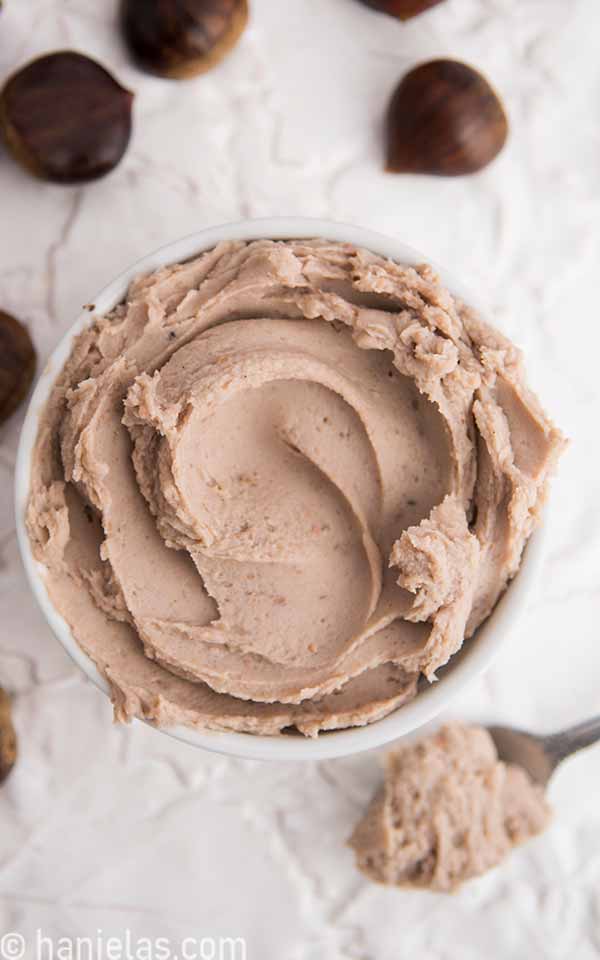
HOMEMADE CHESTNUT PUREE STEP-BY-STEP
Let the battle of chestnuts begin. If you’ve ever wrestled with peeling chestnuts, you know exactly what I mean. The shells crack, the skins cling for dear life, and at one point, I nearly lost my patience, but I kept going, straight to the smooth, creamy, nutty haven.
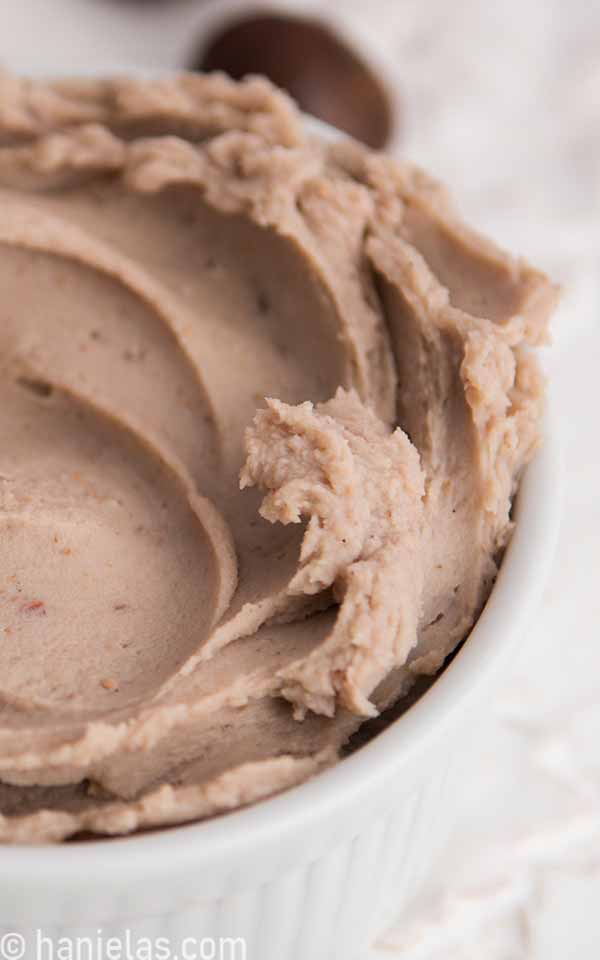
WHY I LOVE THIS RECIPE
I don’t add any sugar to chestnut puree. When chestnuts are in season, I find that, at least those I get, provide enough natural sweetness.
Homemade chestnut puree without added sugar can be used in savory and sweet recipes.
A good homemade chestnut puree is gold. I use a simple method to freeze it, and it lasts for 12 months without any issues. It’s as fresh as the day I made it!
THINGS YOU NEED
- Saucepan
- Kitchen Scale (my favorite)
- Food Chopper/Food Processor
This post contains Amazon affiliate links that earn me a small commission, at no cost to you. I only recommend products that I use and love. Learn more about my affiliate policy here.
CHESTNUT PUREE INGREDIENTS
- Chestnuts – you have two options
- 1. Raw Chestnuts -you’ll need about 1200 grams of fresh chestnuts. These will have to be washed, scored with a knife or kitchen shears, (cutting a slit or an “X” on the flat side) boiled, cooked, and peeled; 1200 raw chestnuts will yield about 700 grams of cooked, peeled chestnuts. You can easily half the recipe without any issues. I like to make a large batch once in a while and freeze it for later.
- 2. Buy Cooked and Peeled chestnuts
- Milk – you can use non-dairy options, too.
- Vanilla Bean Paste, Vanilla Extract

MAKE THE CHESTNUT PUREE
- The process is simple. Simmer previously cooked and peeled chestnuts in milk until about 20% of the milk is left, about 20-30 minutes (steps 1-3).
- Be sure to stir the chestnuts to prevent scorching.
- Before you remove them from the heat, make sure to test a couple, if they are soft. You can press them with a fork, and if they are not soft enough add additional 1/4 cup of milk and I cook them for longer until they’re soft (steps 4-5).
- Then, don’t discard the remaining milk; instead. Strain the chestnuts into a food chopper, reserving the milk.
- Puree chestnuts until smooth. If the puree appears a little too thick and non-cohesive, add some of the leftover milk and blend until smooth.
- Add Vanilla Bean paste or Vanilla Extract.
- I prefer chestnut puree thick, and I purposefully don’t dilute it too much. You can always add more liquid when you’re ready to use it in the recipe, and it’s much easier to freeze when it’s thick.

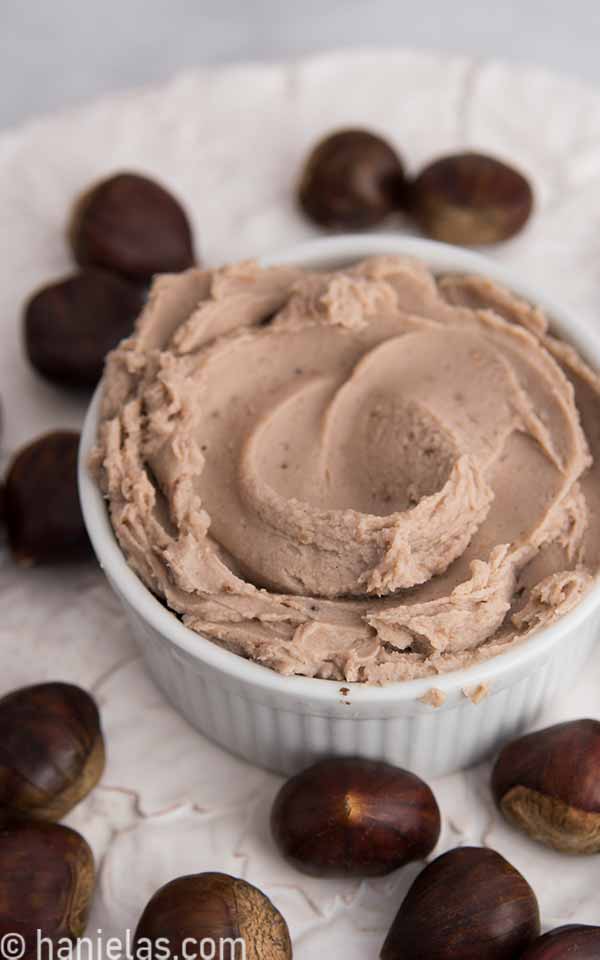
CHESTNUT PUREE SUCCESS TIPS
Here are some of the common problems that I came across while making chestnut puree at home, and my recommendations on how to deal with them.
Before cooking chestnuts in water, be sure to score the hard outer shell and a thin, inner shell. If not scored properly, it’s nearly impossible to remove the peel.
Bitter taste most likely comes from the thin, inner chestnut shell. It’s likely some of this thin, bitter-tasting layer was left on the chestnuts, causing the puree to taste slightly bitter.
It’s important to cook boiled chestnuts in milk until they are soft and easily pressed with a fork. You can try using a potato press or use a food mill to help achieve a silky smooth puree.
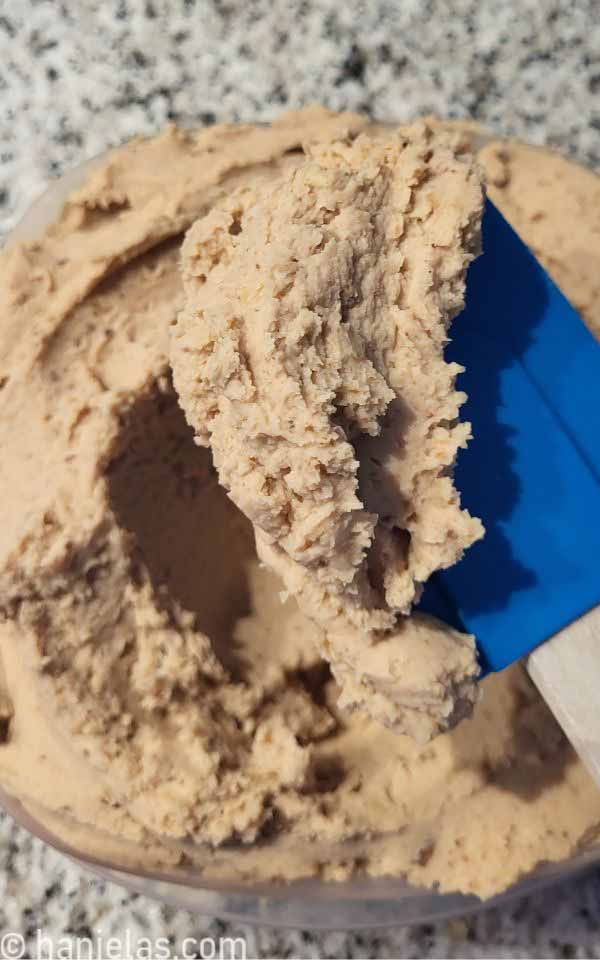
The reason behind a runny puree is simple: too much liquid. When pureeing soft chestnuts, don’t add too much additional liquid to the puree. It’s better to reserve drained milk and add it to the puree when needed.
For the best result, add the flavoring while the puree is slightly warm, after it’s been pureed, and give a couple of pulses to blend it into the puree.
Pure chestnut puree can be used in sweet and savory dishes. One of my favorites is a simple version of Mont Blanc dessert: lightly sweetened whipped cream, topped with sweetened and mildly rum-spiked chestnut puree piped into long, thin noodles.
So far, I’ve been lucky enough to get naturally very sweet chestnuts. If your chestnuts are not sweet at all. Add 2 tablespoons of sugar to the milk when cooking it.

TRY THESE RECIPES
- Easy Vanilla Sponge Cake
- Pistachio Ice Box Cookies
- Mini Tart Shells Recipe
- Pumpkin Cinnamon Rolls via Ambitious Kitchen
- Cranberry Red Wine Hand Pies

Chestnut Puree
Ingredients
- 700 grams boiled, cooked chestnuts without the shells (this is a yield I got from about 1200 grams of fresh chestnuts)
- 4 cups milk, you can use a mild tasting non-dairy version
- 1½ tbsp Vanilla Bean Paste (or use 1 Vanilla Bean, seeds scraped)
Instructions
Simmer Cooked Chestnuts in Milk
- Into a saucepan, pour milk (4 cups), add cooked, peeled chestnuts (700 grams).Bring the mixture to a boil and reduce it to a simmer. Simmer for about 20-30 minutes, until there is only about a 1/3 cup to 1/2 cup of milk left. I like to test the chestnuts to see if they are fork-tender to be sure. If they are not, I add a little more milk and cook for an additional 5 minutes.Be sure to stir the chestnuts, especially towards the end, so they don't scorch at the bottom of the pan.
Puree Soft Chestnuts
- To avoid runny puree, strain braised chestnuts (reserving the milk) into a food chopper and blend them until smooth. Add Vanilla bean paste (1½ tablespoons). If the puree is too thick, add some of the remaining milk and blend until thick and smooth.
Freeze Chestnut Puree
- Spread a cool, thick chestnut puree onto a parchment paper. Spread it into a rectangle or a square. Cover it and chill it until firm. Cut up the block of chestnut puree into more manageable bars. Wrap each bar in a freezer-safe paper and freeze for up to 12-18 months.
Notes
- How long does chestnut puree last? – After it’s made, it can be stored in the fridge for up to 14 days.
- Can I freeze chestnut puree? I like to make a bigger batch and freeze it for later. When frozen properly, it can last in the freezer for up to 18 months.
- This puree is not sweet enough for me! – Sweetness, and color can vary and so if the chestnuts are not sweet, add 1-2 tablespoons of sugar to the milk and cook peeled chestnut in a lightly sweetened milk.

Hi, I’m Hani
Welcome!
Thank you for visiting Haniela’s. On my blog, you’ll find delicious sweet & savory recipes made with simple ingredients. Why not start a new adventure? Discover a world of cookie decorating with my step-by-step tutorials.

Hi, I’m Hani
Welcome!
Thank you for visiting Haniela’s. On my blog, you’ll find delicious sweet & savory recipes made with simple ingredients. Why not start a new adventure? Discover a world of cookie decorating with my step-by-step tutorials.



hi , can i use this puree to make truffles in advance and store them in the fridge for 2 weeks pls . thank you very much
Hello Susan, while I have kept the puree in the fridge for up to 2 weeks. I think with truffles I’d keep them for a week.
Hi!
I’ll be trying this today (maybe adding in too lava cake or souffle for a test, cuorius to see how it will turn out + i have never made a chestnut puree before). I have a question regarding the peeling of chestnut. Can I roast them instead of boiling them? Or will puree then have some hard bits that will add to bitterness?
Thank you!
Hi Liza,
you can roast them or boil them. Roasting intensifies the flavor, but skin maybe harder to remove, you want to be
especially careful to remove the inner membrane (pellicle) as it will make puree bitter.