Quick Flaky Cream Cheese Biscuits Recipe
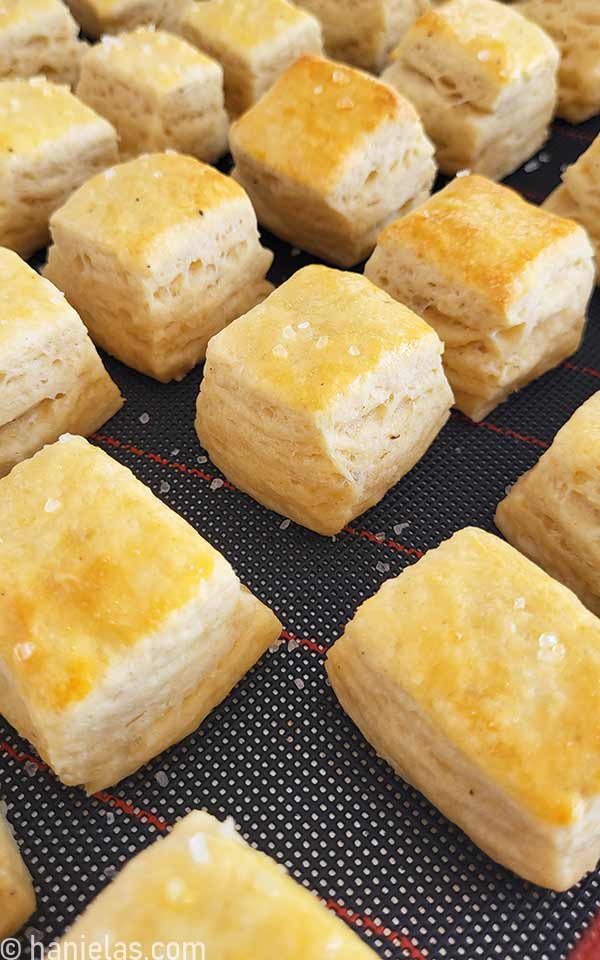
These flaky cheese biscuits are a delicious twist on a traditional yeasted recipe I learned from a neighbor who makes them with pork cracklings. Instead of cracklings, I use soft, creamy cheese that melts into the layers, creating a rich, savory bite that’s hard to resist.

WHY WE LOVE THESE FLAKY BISCUITS
What makes these biscuits so special is the lamination process. A simple yeasted dough is combined with a chilled fat dough, then folded and rolled multiple times to create delicate, flaky layers. It may sound fancy, but the technique is surprisingly simple. It’s just a series of folds that transform the dough into a tasty, flaky treat.
- Quick to make
- This recipe skips the first proof and focuses on the second proof, making these biscuits ready in about an hour.
- Freezer-friendly
- I’m a huge fan of freezing, and these biscuits freeze so well. Take them out of the freezer-safe container and let them defrost on the counter. You quickly heat them fo a couple of seconds in the microwave. We have a couple of freezers, and we’re definitely getting the bang for the buck. I freeze for freshness, availability, and time management.
- Ultra flaky layers
- A simple 3-fold laminating technique gives them a super-soft, pull-apart texture that we love so much.
- Versatile filling
- What I mean by this is that you can flavor creamy cheese filling with spices, herbs, and zest. How about poppy seed, rosemary, lemon, or garlic variation? The world is your oyster. While I often use lard, I use butter when I don’t have it.
- Crowd favorite
- Whenever I bring these to a party, they are an instant hit. I like to pair them with feta dip or plain olive oil for dipping.
INGREDIENTS
- Yeast Sponge (step 1)
- milk
- dry instant yeast
- sugar or honey
- flour
- Wet Ingredients (steps 2-4)
- sour cream or Greek yogurt
- eggs – for the yeast dough and for the egg wash.
- creamy cheese – Philadelphia cream cheese, or other creamy cheeses like Red Laughing Cow, work as well
- Butter or Lard
- Dry Ingredients (steps 5-6)
- flour – good quality all-purpose, bread or a combination of all-purpose and bread flour
- salt
- blackpepper
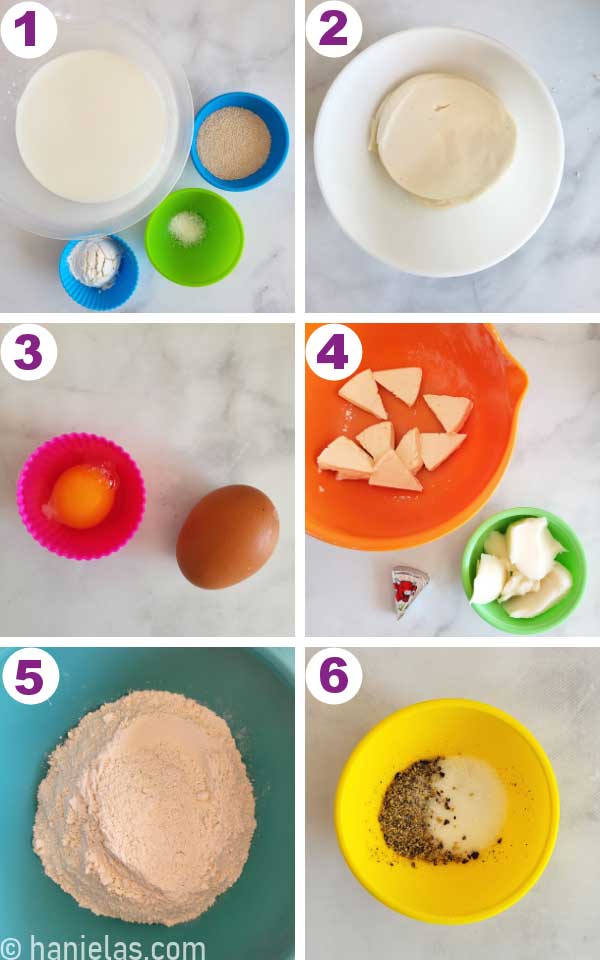
FAT DOUGH DISK
I’ve tested this recipe with different types of creamy cheeses. I like plain cheeses, but you can also use flavored or herbed cream cheese if that’s what you prefer. I like using Red Laughing Cow and Philadelphia Cream Cheese, light or regular (steps 1-3).

In a mixing bowl, prepare the fat dough: combine flour, fat (butter or lard), and creamy cheese. Use a fork to press fat and cheese into the flour. Don’t overwork the fat dough. Shape into a flat rectangular disk. Wrap in a food wrap and chill well, while you prepare the yeast dough (steps 1-8).
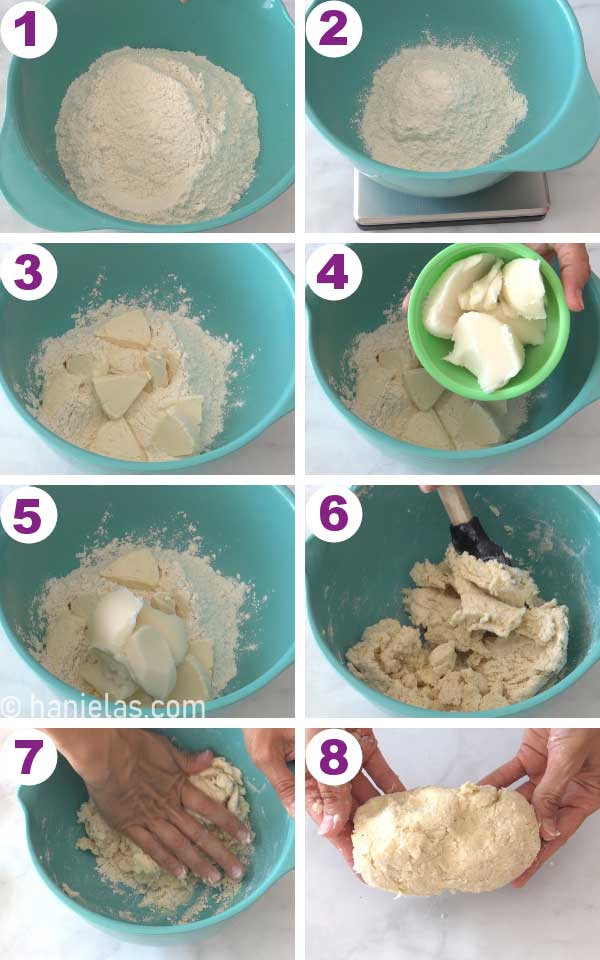
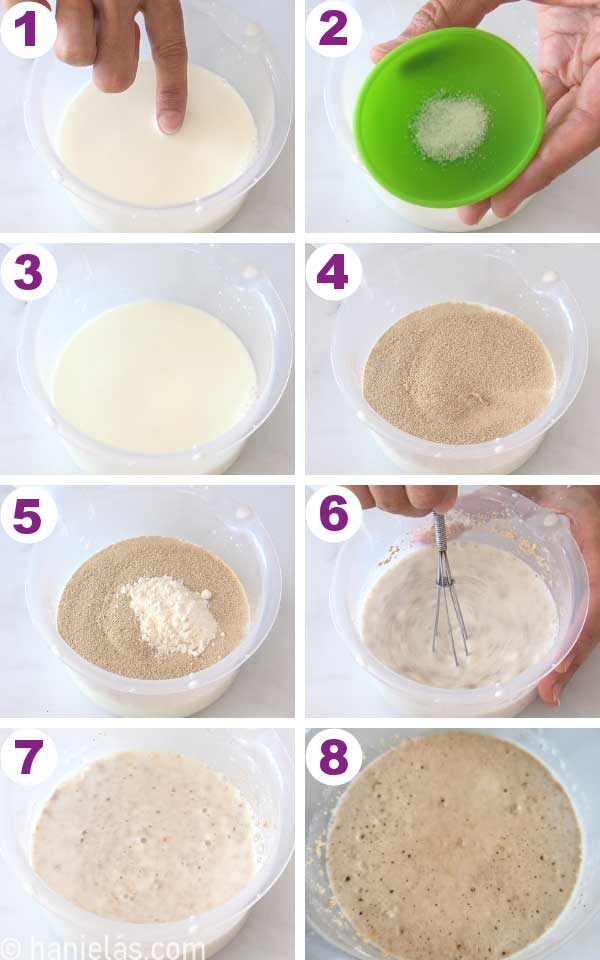
YEAST SPONGE
Into a small bowl, pour warm milk (110°F to 110°F); don’t use hot milk, or it will kill the yeast (step 1). Add a pinch of sugar or honey (steps 2-3). Spoon in the dry instant yeast and flour, then whisk to combine (steps 4-7). Let the mixture sit for 5-10 minutes, until it gets bubbly on the surface (step 8). If it doesn’t get bubbly, most likely the yeast is no longer active or the milk was too hot, which is what likely killed it.
YEAST DOUGH
Pour the flour, yeast sponge, room-temperature egg, and sour cream into a mixing bowl. Combine all the ingredients with a wooden spoon (steps 1-8).

At this stage, this yeast dough is sticky. This is normal. Invert the dough onto a floured work surface. (steps 1-3). Knead the dough for about 5-7 minutes. To knead, use a simple kneading method. The easiest way to knead by hand is to push the dough away from you with the heel of your palm, then fold it over itself with your fingers, and pull it back. Rotate the dough clockwise and repeat until a ball forms. This dough is a bit sticky; it’s normal.

TRI-FOLD LAMINATING TECHNIQUE
Flaky dough is created by laminating a fat dough with a yeasted dough. Each is prepared separately. The fat dough is chilled while the yeasted dough is mixed and kneaded until smooth.
- Flatten the yeast dough into a rectangle on a lightly floured work surface. Keep the longer side of the rectangle facing your torso (steps 1-4).
- Gently press the butter/lard dough into the middle of the rolled-out yeast dough (steps 5-6).
- Enclose the chilled fat dough inside the yeasted dough. Lift the short end of the dough and fold it over, into the middle of the yeasted dough (step 7). Then fold the opposite short end over so the ends meet in the middle (step 8).
- Turn the ‘pouch’ clockwise, so the open ends are on the sides. Roll it out into a rectangle, keeping the open ends on the sides.
- Perform a simple tri-fold by folding one short side over the rolled-out dough, about 2/3 of the way. Then, fold the other side over it, like a letter. Rotate the dough so the open ends face outward, then roll it out again and repeat the tri-fold 4 times.
- If the dough begins to shrink or resist rolling, cover it and let it rest for about 10 minutes to relax the gluten before continuing.
- Usually, you need to let the dough rest between folding steps; in this recipe, you don’t have to.

Repeat the laminating steps (steps 1-8). To help you handle the dough, especially when lifting the short ends during folding, try using a bench scraper (step 5).

As you repeat the tri-fold, the dough becomes cohesive and easier to work with. During the last tri-fold, focus on maintaining an evenly shaped rectangle. We are going to cut biscuits from the rectangular shape.

CUT BISCUITS
After the last fold, turn the dough over so the seam is on the bottom (step 1). At this point, you may notice the dough resisting and shrinking back as you roll it out. If that happens, cover it with a towel or baking sheet and let it rest for 10–15 minutes to allow the gluten to relax. Roll the dough to about ½ inch to ¾ inch thick (steps 2-3). Cut a whole sheet of dough into about 1. 25 to 1.5-inch squares (steps 4-8). The flaky texture of these biscuits relies on a single cutting technique. There shouldn’t be any scraps.
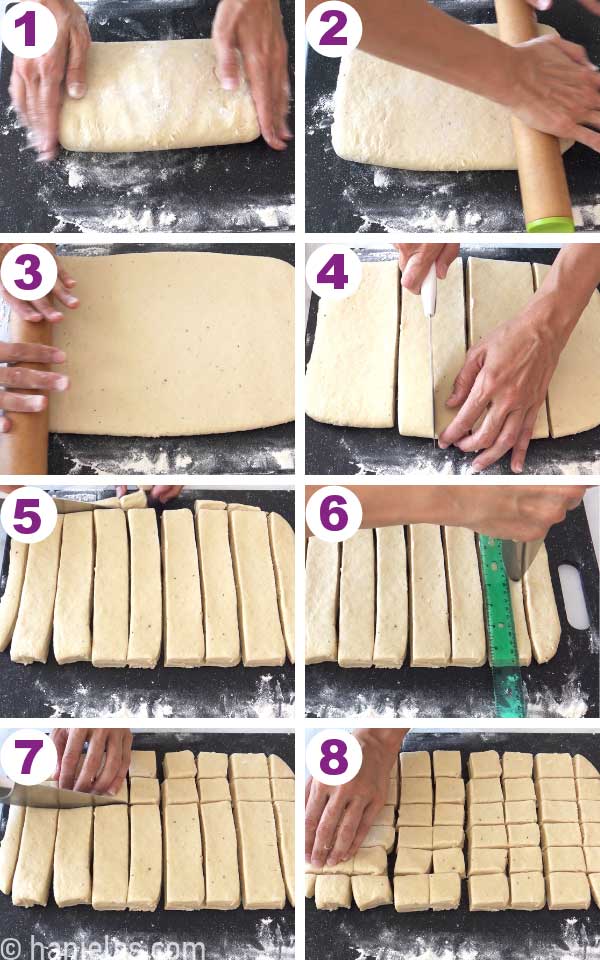
PROOFING
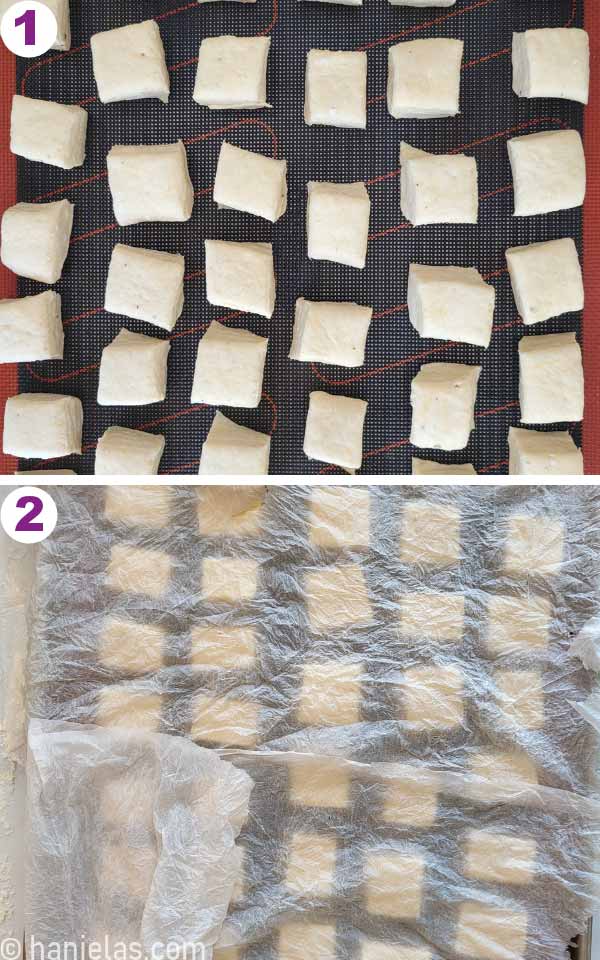
Transfer unbaked biscuits onto a baking sheet lined with parchment paper, silicone, or a perforated mat. Space them out about ¾-inch apart. Cover biscuits with a damp paper towel or well-greased food wrap. And let them rise in a warm, draft-free spot for 45-50 minutes.
BAKE
Preheat the oven to 350°F (180 °C). In a small bowl, prepare egg wash: whisk egg with a teaspoon of water (steps 1-3).
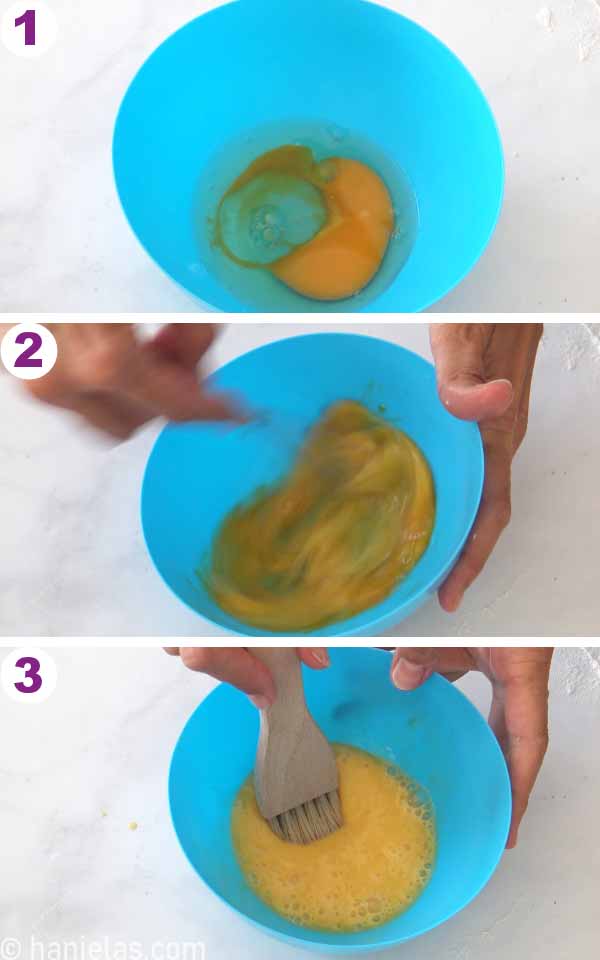
Brush the tops of risen biscuits with the egg wash and sprinkle them with sea salt, pretzel salt, or caraway seeds. Don’t allow the eggwash to pool around the biscuits.

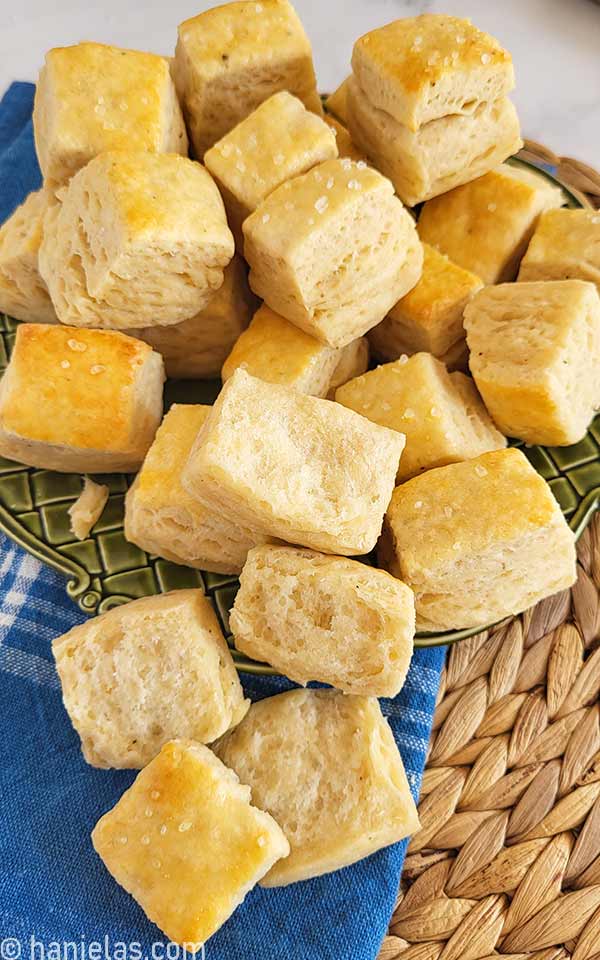
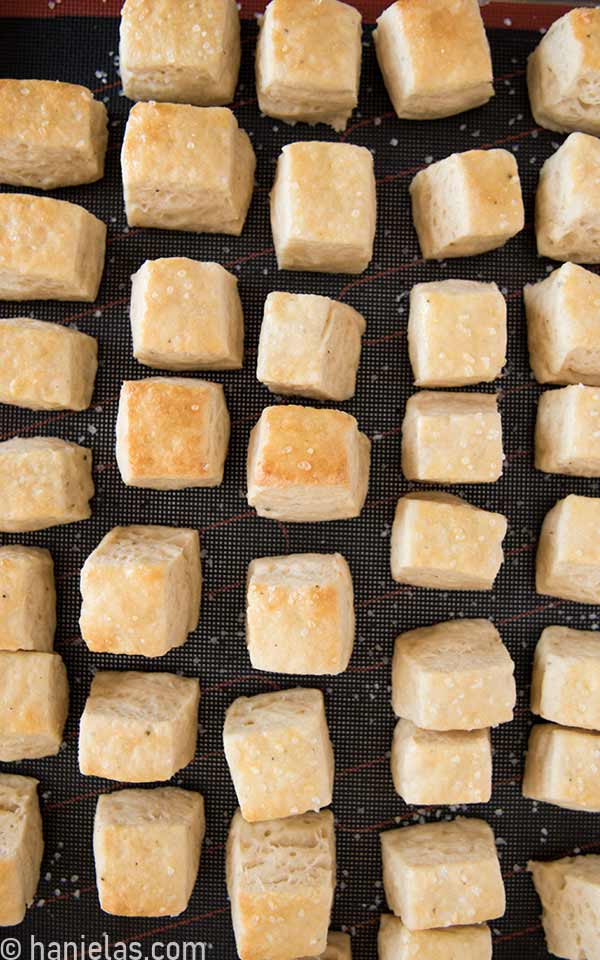
Bake in the preheated oven at 350°F (180°C) for 10-11 minutes. The key to success is a short baking time; these bake quickly and should stay pale with just a hint of color to keep them soft and flaky. Otherwise, when baked for too long, they are not as soft. Let cool before serving.
FAQ AND SUCCESS TIPS
In an airtight container, at room temperature for up to 5 days. Or you can freeze these flaky biscuits for up to 3 months. Let them come to room temperature before serving.
These soft biscuits make great appetizers. They are great plain or with wine or beer. Serve cream cheese biscuits alongside ham, chicken, fruit, feta dip, or dipping olive oil
For the best results, use dry instant yeast.
While it may be tempting to do so. It’s best to handle the dough as little as possible to achieve flaky layers, and I recommend cutting the entire sheet into small cubes at once.
Yes, absolutely. Roll it out, cut and bake biscuits the next day.
MORE APPETIZER RECIPES
- Garlic Breadsticks
- Prosciutto Crostini with Beet and Horseradish Cream
- Homemade Sun-Dried Tomatoes
- Sour Cream Tartar Sauce
- Spinach Puffs via Well Plated by Erin
- Whipped Feta Dip/Spread

Flaky Cream Cheese Biscuits
Ingredients
Butter/Lard Dough
- 1 cup good quality all-purpose (King Arthur), bread flour, or a combination of bread and all-purpose 140-143 grams
- 2/3 cup cream cheese, or laughing cow spreadable cheese 150 grams
- 7 tbsp butter or lard 100 grams
Yeast Sponge
- 1 cup warm milk (250ml) 250ml/250grams
- 3 ½ tsp dry instant yeast
- pinch of sugar or honey
- 1 tbsp All-purpose flour
Yeast Dough
- 2 ¾ cup good quality all-purpose (King Arthur), bread flour, or a combination of bread and all-purpose, plus more for dusting 385-400 grams
- 3/4 tsp ground black pepper
- 1 tsp table salt
- 1 large egg
- 1/3 cup room temperature sour cream or plain yogurt 85 grams |Greek or a vegan yogurt is fine, drain it if it's too runny, it should be thick|
Toppings
- 1 egg
- 1 tbsp water
- sea salt, pretzel salt, poppy seeds, carraway seeds (optional)
Instructions
Butter/Lard Dough
- Into a mixing bowl, add flour (1 cup, 143 grams), add room temperature butter or lard (7 tablespoons, 100 grams), and cream cheese (2/3 cup, 150 grams). Blend together with a spatula or a wooden spoon to form a fat dough. Shape into a rectangular disk. Wrap in a food wrap and freeze while you prepare the yeast dough. This dough doesn't need to be rock hard; well-chilled is fine.
Yeast Sponge
- Into a small bowl, pour warm milk (1 cup, 250ml), add dry yeast (3 teaspoons and 1/2 teaspoon), a pinch of sugar or honey, and flour (1 tablespoon). Whisk and let it sit for 5-10 minutes until foamy and bubbly on the top.TIP: Don't use hot liquid, as it will kill the yeast. Milk should be 100F-110F/ 38°C-43°C
Yeast Dough
- 1. Stand Mixer – pour flour (2 ¾ cups, 385-400 grams), salt (1 teaspoon), ground black pepper (3/4 teaspoon), 1 egg, sour cream (1/3 cup, 85 grams), and yeast sponge. Knead with a hook attachment until the dough comes together, for about 5-7 minutes. This is a soft dough, and it will not form a dough that pulls away from the mixer bowl. Scrape out the dough onto a floured work surface.2. By Hand – pour flour (2 ¾cup, 385-400grams), salt (1teaspoon), ground black pepper (3/4 teaspoon), 1 egg, sour cream (1/3 cup, 85 grams), and yeast sponge. Stir with a wooden spoon until combined, dump it out onto a floured work surface, and knead for about 5-10 minutes. Oil or lightly wet your hands with water if the dough is too sticky. It doesn't need to be perfectly smooth.TIP: The easiest way to knead by hand is to push the dough away from you with the heel of your palm, then fold it over itself with your fingers, and pull it back. Rotate the dough clockwise and repeat until a ball forms.
Easy Tri-Fold Dough Laminating
- 1. On a floured work surface, roll out the yeast dough into a rectangle (about 1/2 to 3/4 inch thick, with the longer side facing your torso. 2. Place the fat dough disk in the middle of the rolled-out yeast dough. Flatten it slightly with a rolling pin.3. Fold the short ends of the yeast dough over the fat dough, so the ends meet in the middle.4. If the yeasted dough is very sticky, dust it with a little bit of flour.5. Turn the 'pouch' clockwise, so the exposed ends are facing outward.6. Roll it out into a long rectangle.7. Fold the right short end of the dough over about 2/3 of the length of the rolled-out dough. And then fold the left short end over the previous fold. You should have a tri-fold pouch.8. Turn the tri-fold pouch clockwise so the exposed ends are facing outward.9. Roll out the dough into a rectangle about 1/2 inch thick. 10. Repeat the tri-fold. Turn the pouch clockwise, roll it out. And repeat the tri-fold.11. Repeat the tri-fold 4 times.12. Focus on maintaining a nice, even rectangle.
Cutting Biscuits
- After the last tri-fold, turn the rectangular piece of dough over so the seam faces the work surface. If the dough appears too stiff and retracts when being rolled out, cover it with a towel and let it rest for 10-15 minutes; this helps relax the gluten.Roll it out to about 1/2 inch to 3/4 inch thick. With a sharp knife, cut the dough into small squares, rectangles, or triangles. Don't re-roll.TIP: You can use a pizza wheel to cut the dough.
Proofing
- Transfer unbaked biscuits onto a baking sheet lined with parchment paper, leaving about 1/2 inch to 3/4 inch between biscuits. Loosely cover with a damp paper towel or greased food wrap, and let rise in a warm and draft-free spot for 45-50 minutes.TIP: Let them rise in a warm spot. It will take longer for the biscuits to rise in a cool room.
Toppings
- Crack an egg into a small dish, add 1 tablespoon of water, and whisk well to combine.Once biscuits are proofed, remove the paper towel and brush the tops with an egg wash, avoiding pooling.Sprinkle with topping of your choice, if using.
Bake
- Preheat oven to 350℃F/180°C.Bake in the preheated oven at 350°F/180°C for about 10-11 minutes, just until the tops turn lightly tan. Allow to cool before serving or freezing.
Notes
- What kind of flour should I use? – I recommend using good-quality all-purpose flour (for example, King Arthur All-Purpose flour (with 11.7 % protein content), bread flour (12-14% protein content), or a combination of weak all-purpose (10% protein content) and bread flour. Check the nutritional label for details.
Did you make this recipe? Tag @hanielas on Instagram and hashtag it #hanielas

Hi, I’m Hani
Welcome!
Thank you for visiting Haniela’s. On my blog, you’ll find delicious sweet & savory recipes made with simple ingredients. Why not start a new adventure? Discover a world of cookie decorating with my step-by-step tutorials.

Hi, I’m Hani
Welcome!
Thank you for visiting Haniela’s. On my blog, you’ll find delicious sweet & savory recipes made with simple ingredients. Why not start a new adventure? Discover a world of cookie decorating with my step-by-step tutorials.