
Chocolate Chip Cookies | Secrets to Chewy Cookies
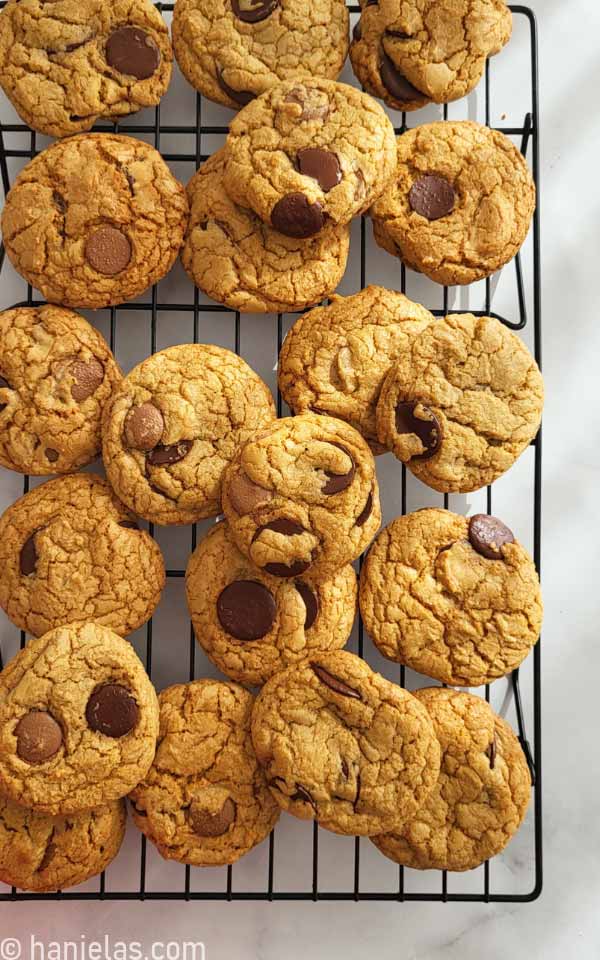
If you’re craving chocolate chip cookies with perfectly crisp edges, irresistibly chewy centers, and deep, buttery toffee notes, this recipe is for you.
WHY YOU’LL LOVE THIS RECIPE
- Perfect balance of chewy and crisp: cookies have soft centers, lightly crisp edges, a rich, buttery flavor, and plenty of chocolate.
- Extra egg yolk: recipe uses an extra egg yolk for a chewier texture while remaining balanced, not cakey or overly dense.
- No mixer required: while I used a hand-held mixer, cookie dough is easy to prepare by hand.
- How to make extra chewy cookies – discover all the secrets on how to make cookies extra chewy

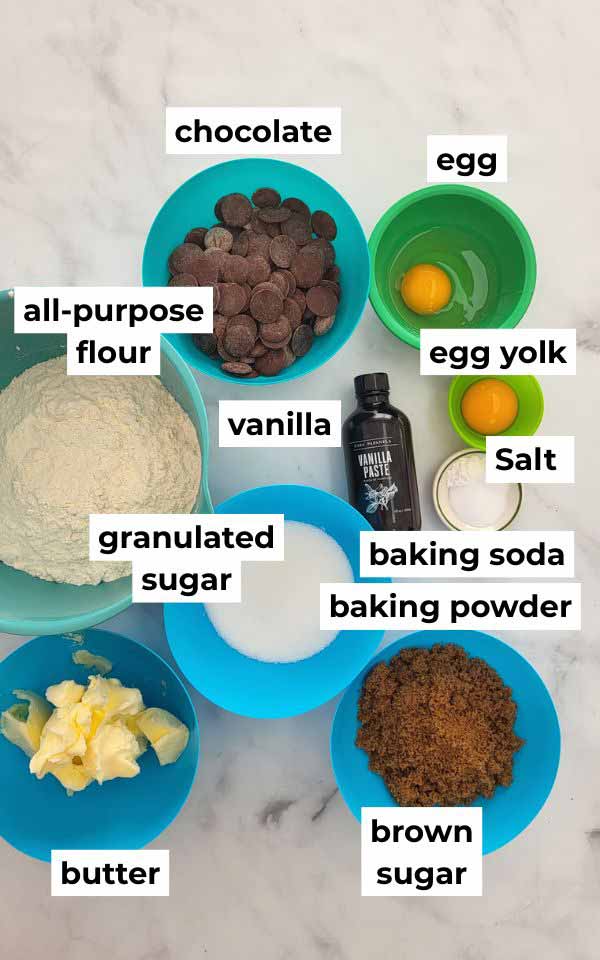
INGREDIENTS
COOKIE DOUGH STEP-BY-STEP
This chocolate chip cookie dough comes together easily with just a whisk and a spatula, no mixer required. However, while testing and photographing this recipe, I was recovering from a frozen shoulder, so using a hand mixer was simply the more comfortable option.
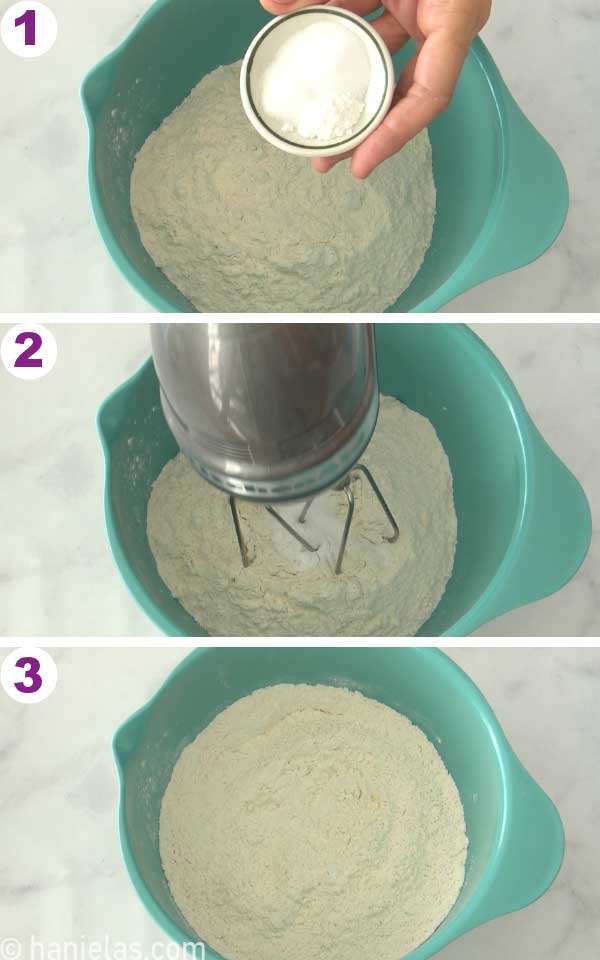
1. Dry Ingredients: Combine all-purpose flour, baking soda, baking powder, and salt (steps 1-3). In this recipe, I use both baking soda and baking powder.

2. Egg and Egg Yolk: Whisk the eggs before adding them to the batter; they blend with the butter and sugar more easily, and it’s especially useful if you are mixing by hand without a mixer.
WHY THIS RECIPE USES EXTRA EGG YOLK
- Egg yolks add fat, acting as an emulsifier (lecithin) that creates a softer, chewier texture.
- Fat creates tenderness.
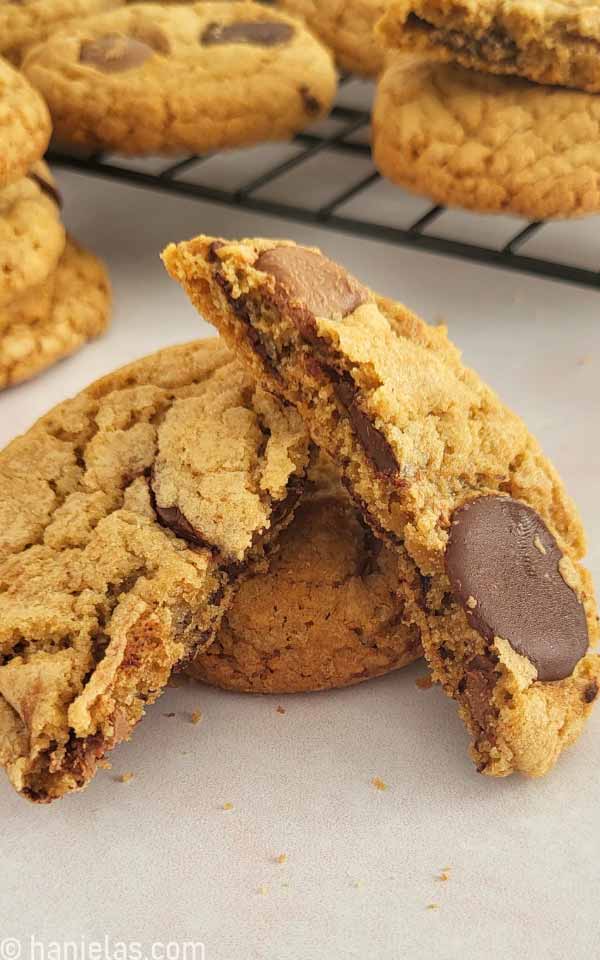
- Egg yolks have less water than whole eggs, which contributes to a richer flavor and results in a chewier cookie without making it cakey.
- Extra egg yolks can make the dough a little stickier; that’s why it’s important to chill the dough before baking cookies.
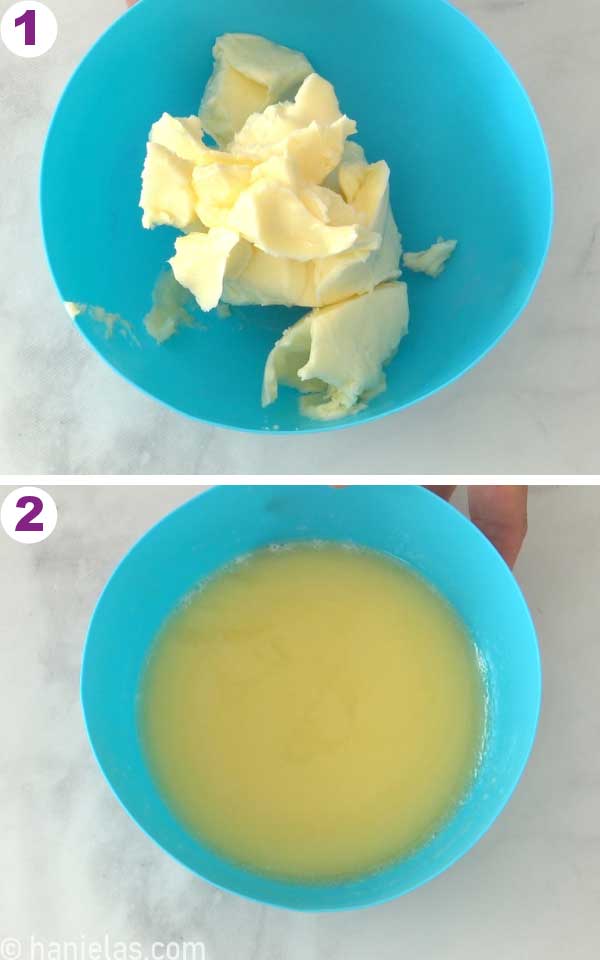
3. Melt Butter: Into a mixing bowl, pour hot melted butter, add brown sugar and granulated sugar, and beat for about 2- 3 minutes, until combined. Then cover the bowl and let the mixture rest for 5-10 minutes.

4. Cream Butter and Sugar: Into a mixing bowl, pour hot melted butter, add brown sugar and granulated sugar, and beat for about 2- 3 minutes, until combined. Then cover the bowl and let the mixture rest for 5-10 minutes.
THE SCIENCE BEHIND A 5-MINUTE REST
After mixing the butter and sugars, stop mixing and let the mixture rest for 5–10 minutes. This short pause gives the sugar more time to dissolve into the butter. The more dissolved the sugar is before baking, the more evenly it caramelizes in the oven, creating deeper toffee-like flavor and contributing to a beautifully textured cookie. It’s a small step that makes a noticeable difference.

5. Add Egg and Vanilla: Then gradually beat in eggs and Vanilla Extract (steps 1-4).

6. Mix in Dry Ingredients: Then, in 2 additions, on low speed, mix or stir in the flour mixture. Cookie dough will be shiny (steps 5-8).

7. Fold in Chocolate: Use good quality chocolate. I prefer dark chocolate, but semi-sweet or milk can also be used. Try a blend of two. I used disks because I love the way they bake in layers, but you can of course use chocolate chips or chocolate chunks. Stir chocolate into the cookie dough.

8. Portion Cookie Dough: Use a medium-size cookie scoop to measure even mounts of cookie dough onto a baking sheet lined with parchment. Space out cookie dough about 2 inches apart (steps 1-4).
BAKE NOW OR CHILL THE DOUGH
Baking without chilling: At this point, your cookie dough is ready to bake. If you bake the cookies immediately, they’ll spread more in the oven, resulting in thinner, flatter cookies.
Why chilling the dough is worth it: For thicker, chewier cookies, cover and refrigerate the dough for at least 15–30 minutes before baking. For the very best flavor and texture, chill the dough overnight or for up to 2 days. As the dough rests, the flour has time to fully hydrate, and the flavors deepen, giving the baked cookies an almost toffee-like flavor. If you can wait, your cookies will be that much better!

9. Bake in Preheated Oven: Bake cookies at 335°F (170°C) for 12-13 minutes, until golden brown around the edges, puffy and soft in the middle. Transfer cookies onto a cooling rack to cool completely. Cooled cookies can be frozen for later.
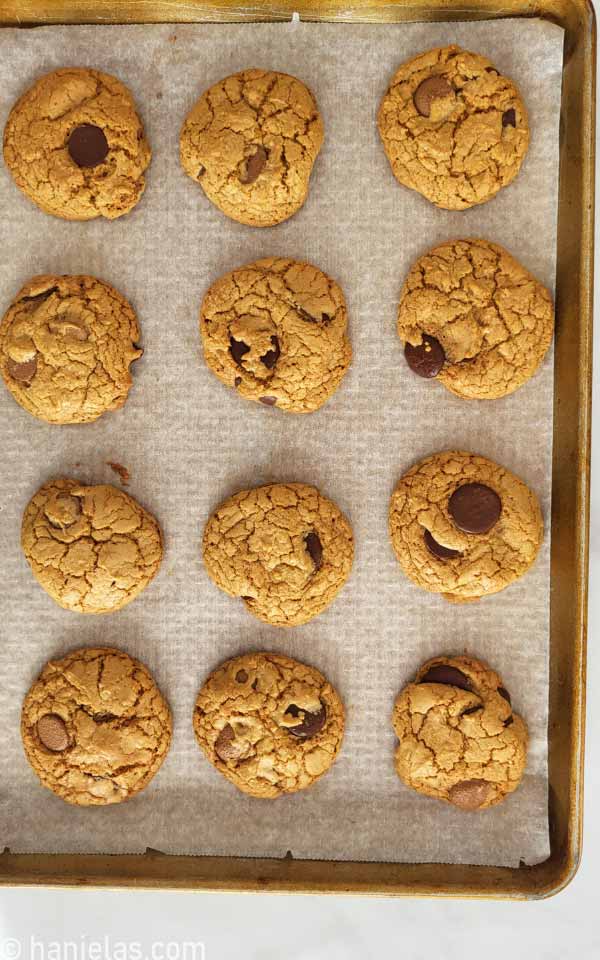
10. Allow to cool on a baking sheet for 2-3 minutes, then transfer cookies onto a cooling rack to cool completely. Cooled cookies can be frozen for later.

THE SECRET TO CHEWIER COOKIES
If you’re on a hunt to make your cookies even chewier, there are several things you can do to make them the way you like.
- Egg yolk: extra egg yolk contributes richness, flavor, tenderness, and chewiness.
- All-purpose and bread flour: use a blend of AP flour and bread flour to create chewier cookies. Don’t overwork the dough, and let it rest to relax the gluten before baking cookies.
- Brown sugar (start with 70% brown sugar and 30% white sugar): use a high ratio of brown sugar to white sugar.
- White sugar provides crispy edges while brown sugar plays a key role in creating soft, chewy chocolate chip cookies.
- The molasses in brown sugar adds moisture to the dough and is hygroscopic, meaning it attracts and retains moisture during baking and storage.
- This helps keep the cookies soft and chewy for days.
- As an added bonus, the molasses and sugars caramelize readily in the oven, creating rich, toffee-like flavors and beautifully browned edges.
- Rehydrated melted brown butter (use it as a 1:1 substitute, 1 cup of brown butter: 1 cup of butter): prepare brown butter; replace evaporated water with milk, water, or coffee. Brown butter adds rich, nutty, and caramel-like flavor.
- Cornstarch (add 1-2 teaspoons per 1 cup of flour): helps inhibit gluten formation, keeping cookies soft.
- It also traps moisture, keeping them softer for longer.
- Invert sugar syrup: helps keep cookies soft and moist for longer, extending their shelf life without altering their flavor.
- It’s neutral in taste, easy to make at home, and highly hygroscopic, meaning it attracts and retains moisture.
- Best of all, you only need a small amount in each batch to make a noticeable difference.
- It’s 1.3 times sweeter than sugar.
- Replace 10%-15% of sugar in the recipe with invert sugar syrup.
- Chilling dough: For the very best cookies, let the dough rest in the refrigerator overnight.
- As it chills, the flavors deepen, giving the baked cookies a rich, almost toffee-like flavor that’s well worth the wait.
- An overnight rest also gives the flour more time to fully hydrate.
- While the water in the dough is absorbed fairly quickly, the moisture from the eggs and extra egg yolk takes much longer to distribute throughout the dough.
- This extended hydration creates a more evenly textured dough, resulting in thicker, chewier cookies with better flavor and less spread during baking.
- Underbaking slightly: Lowering the oven temperature by 25°F and extending the baking time by a few minutes gives the centers more time to bake through without overbrowning the edges or bottoms.
- Bake the cookies at 325°F (160-165°C) and remove them from the oven as soon as the edges are golden brown and the centers still look slightly soft.
- They’ll continue to set as they cool on the baking sheet.


BAKING SUCCESS TIPS
- runny flat cookies
- can I freeze cookie dough?
- how long do cookies keep?
- how to make extra-large chocolate chip cookies?
Runny Flat Cookies
- Warm dough is the most common culprit of runny, flat cookies. If the dough hasn’t been chilled, the butter melts rapidly in the oven before the flour and eggs have time to set the cookie’s structure. To prevent excessive spreading, chill the dough for at least 15–30 minutes before baking.
- Overmixing can also contribute to flatter cookies. Once you add the flour, mix just until it’s incorporated. A few small streaks of flour are perfectly fine before folding in the chocolate chips.
- If your kitchen is warm, or the dough becomes soft while you’re scooping, refrigerate or freeze the portioned cookie dough for 10-15 minutes before baking. Starting with cold dough helps the cookies hold their shape as they bake.
Can I freeze cookie dough?
- Yes, you can freeze cookie dough.
- Use a cookie scoop to measure the dough into even portions.
- Freeze on a baking sheet and then store in a freezer-safe bag or container for up to 3 months.
- You can bake frozen cookie balls; add about 2 more minutes to the baking time.
How long do cookies keep?
About 10 days, stored at room temperature, in an airtight container.
How to Make Extra-Large Chocolate Chip Cookies?
- Portion the dough: Use a ½-cup (120 ml) measuring cup to portion the dough. You’ll fit 2 cookies per baking sheet.
- Flatten the dough: Gently press each mound with the back of a measuring cup. This encourages even baking and helps the cookies spread into large, uniform rounds.
- Lower the oven temperature: Bake at 325°F (160–165°C) instead of 335°F. The lower temperature gives the centers time to bake through without overbrowning the edges.
- Bake longer: Bake for 15-17 minutes, or until the cookies are golden brown, with slightly darker edges and centers that still look a little soft.
- Optional: Flatten the Cookies: If you’d like your cookies to spread a little more, gently tap the baking sheet on the counter once or twice immediately after removing it from the oven. This helps the cookies settle into thinner, more even rounds while they’re still soft.
- Cool before moving: Let the cookies cool on the baking sheet for 5 minutes, then transfer them to a wire rack to cool completely. The residual heat will finish baking the centers, keeping them soft and chewy. Use a large, flat cookie spatula to transfer the cookies.

Gently test the center of the cookie. It should still be slightly soft when it comes out of the oven, as it will continue to bake and set on the hot baking sheet.

Using ½ cup of cookie dough per cookie yields chocolate chip cookies approximately 6½ inches (16.5 cm) in diameter after gently tapping the baking sheet on the counter while the cookies are still hot.
FAVORITE CHOCOLATE RECIPES
Chocolate Chip Cookies
Ingredients
- 2 cups all-purpose flour 285
- 3/4 tsp baking soda
- ¼ tsp baking powder
- ½ tsp salt
- 12 tbsp 1 ½ sticks butter, melted and hot 170 grams
- ½ cup granulated sugar 100 grams
- ¾ cup brown sugar, packed 150 grams
- 1 large egg
- 1 egg yolk
- 1 1/3 cups dark chocolate chips or chocolate disks
Instructions
Cookie Dough
- In a mixing bowl, combine flour (2 cups, 285 grams), baking soda (1 teaspoon), baking powder (1/4 teaspoon) and salt (1/2 teaspoon). Set aside.
Beat Butter and Sugars
- Melt 1½ sticks (170 grams) of unsalted butter. Pour hot butter into a bowl.Combine granulated sugar (1/2 cup, 100 grams) and brown sugar (3/4 cup, 150 grams) in a mixing bowl. Add the sugars to a bowl with hot butter, by hand or with a handheld mixer on medium-high speed beat for 1-2 minutes until well combined. Then allow mixture to rest for 5-10 minutes.
Add Eggs
- In a bowl, whisk the egg and egg yolk and gradually beat eggs into the butter mixture. Scrape down the bowl and beat until smooth, about a minute.
Fold in Flour and Chocolate
- Gradually, on low speed or by hand, stir the flour mixture into the butter mixture until just combined; some flour streaks are fine.Stir in chocolate disks or chocolate chips, cover, and allow to rest in the fridge for 15 minutes or up to 2 days.
Bake Cookies
- Preheat oven to 335°F /170℃Divide dough onto a baking sheet lined with parchment. Use a cookie scoop to drop even amounts of cookie dough onto a baking sheet, about 2 inches apart.
- Bake cookies in a preheated oven just until lightly golden brown around the edges, puffy and soft in the middle.Transfer cookies onto a cooling rack to cool completely.
Video

Hi, I’m Hani
Welcome!
Thank you for visiting Haniela’s. On my blog, you’ll find delicious sweet & savory recipes made with simple ingredients. Why not start a new adventure? Discover a world of cookie decorating with my step-by-step tutorials.

Hi, I’m Hani
Welcome!
Thank you for visiting Haniela’s. On my blog, you’ll find delicious sweet & savory recipes made with simple ingredients. Why not start a new adventure? Discover a world of cookie decorating with my step-by-step tutorials.

I m a fan of Haniela
Thank u for amazing recipes
Thank you so much, Pragna.